
Water Heater Drain Pan Checks Before a Leak Spreads
On this page
- Quick answer
- What a drain pan can and cannot do
- Warning signs around the heater
- A safe visual inspection
- Check the pan drain line
- Do not assume the tank is the source
- Repair and replacement decisions
- Drain pan inspection checklist
- Limitations and safety notes
- Frequently asked questions
- Sources and evidence notes
- Next steps
Quick answer
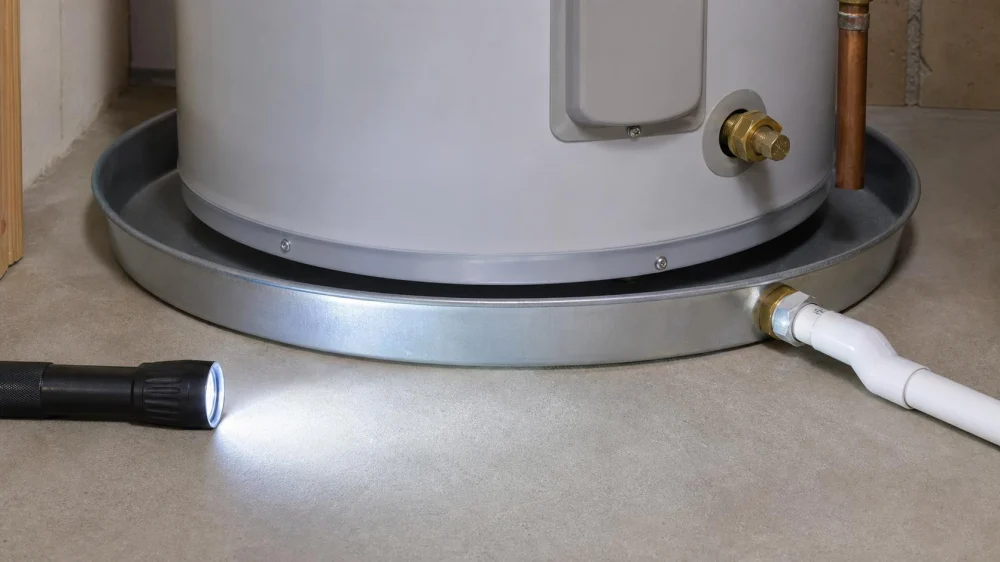
Use a flashlight to inspect the water heater drain pan without moving the appliance. The pan should be intact, correctly positioned, and free of standing water, rust flakes, or debris. Trace the pan's drain line only where visible and check its outlet. Water in the pan, a blocked line, corrosion, or an unknown discharge point calls for prompt professional assessment.
This guide is for US homeowners making a visual check around a conventional tank-style water heater. It does not authorize work on gas, fuel, venting, electrical, pressure-relief, or hot-water components.
What a drain pan can and cannot do
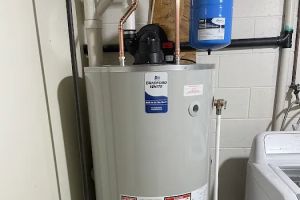
A water heater drain pan is a shallow tray beneath the tank. Where installed and properly drained, it can collect limited leakage or nuisance water and direct it toward an approved location. Requirements depend on the appliance location, local code, pan material, drain size, and discharge route.
A pan is not a repair for a leaking tank and is not designed to contain every failure. It may not keep up with a ruptured connection or large tank leak. It also cannot protect the building if the drain is blocked, disconnected, routed uphill, or discharged where water causes damage.
Think of the pan as a secondary control and an inspection point. The water heater, supply connections, relief system, and surrounding plumbing still need to remain sound.
Viper Rooter and Plumbing Inc.
AnaheimOrange CountyCalifornia
1840 W Lincoln Ave Suite I, Anaheim, CA 92801, USA
Warning signs around the heater
- Water in the pan: any unexplained water deserves investigation, even if the level is low or later evaporates.
- Rust or mineral residue: flakes, streaks, or crust can mark recurring moisture or corrosion.
- Damaged pan: cracks, holes, crushed edges, or a pan too small or off-center can reduce protection.
- Drain problems: a loose fitting, sagging line, visible blockage, uphill routing, or unknown termination needs correction.
- Building damage: stained drywall, swollen trim, soft flooring, musty odor, or marks on a ceiling below suggest water has escaped the intended path.
- Appliance clues: drips at visible connections, wet insulation, corrosion at the tank base, or repeated burner or control problems require qualified service.
Condensation, a nearby pipe, a humidifier, HVAC equipment, or a relief-valve discharge can put water near a heater. Finding moisture is the start of diagnosis, not proof that the tank itself has failed.
A safe visual inspection
- Keep your distance from hazards. Do not touch venting, hot pipes, gas controls, wiring, or wet electrical equipment. If you smell gas, leave the area and follow the utility's emergency instructions from a safe location.
- Improve visibility. Use a flashlight rather than an open flame. Keep the path and required clearance around the appliance free of storage.
- Look into the pan. Without reaching under or tilting the heater, check for water, sediment, corrosion, cracks, and objects that could block the drain opening.
- Inspect the tank base. Look for water tracks, rust, or damp insulation where visible. Do not remove access covers.
- Scan connections from a safe position. Look at the visible hot and cold connections and nearby piping. Do not operate the temperature-and-pressure relief valve as a casual test.
- Check the surrounding surfaces. Note floor stains, wall damage, and any route water could take to a lower level.
- Document changes. Take clear photos of the pan, drain connection, and any residue. A professional can use them to compare conditions.
Never move or rock a connected water heater to see beneath it. A filled tank is extremely heavy, and movement can damage water, gas, vent, or electrical connections.
Check the pan drain line
Trace the drain from the pan only along its visible, accessible route. It should remain connected, supported, and free of obvious crushing or uphill sections. The approved termination depends on local code and building design; do not assume that any floor drain, outdoors location, or plumbing connection is acceptable.
If the outlet is visible, make sure it is not buried, capped, painted shut, or obstructed by stored items, soil, insects, or debris. Do not insert tools or chemicals into the line. A plumber can verify the pipe size, slope, material, termination, and whether a separate trap or indirect connection is required.
Do not pour water into the pan as a test when the destination is unknown. A disconnected or improperly routed drain could send that water into a wall, ceiling, crawlspace, or unsafe exterior location.
Do not assume the tank is the source
When water is present, dry only accessible, cool surfaces and observe where new moisture first appears. Note whether it follows hot-water use, heater operation, HVAC operation, or rainfall. Do not dismantle components to improve the view.
Possible sources include supply fittings, the drain valve, temperature-and-pressure relief piping, internal tank leakage, condensation, or unrelated nearby equipment. Water can travel along pipes and surfaces before dripping into the pan, so the point where it lands may not be the point where it started.
A relief valve or discharge pipe that is dripping, capped, plugged, reduced, or routed incorrectly requires prompt qualified attention. Do not cap a relief discharge to stop water.
Repair and replacement decisions
Pan or drain repair
A cracked, undersized, or poorly drained pan may need correction even when the heater is sound. Because installing a new pan can require draining, disconnecting, and lifting the appliance, it is usually professional work. The new installation must match the appliance and local requirements.
Plumbing connection repair
A leaking accessible fitting may be repairable, but corrosion, valve condition, pipe material, and appliance connections affect the method. Do not tighten fittings on a live gas or electrical appliance without the necessary knowledge and isolation procedures.
Tank replacement assessment
Water emerging from the tank body or base often points toward replacement rather than patching. A licensed plumber can confirm the source, review the installation, and discuss equipment options. Do not rely on leak sealers or a pan to extend the use of a failed tank.
Drain pan inspection checklist
- The pan is visible, intact, and centered beneath the tank.
- No standing water, fresh moisture, rust flakes, or debris is present.
- The drain fitting is connected and not visibly cracked.
- The visible drain line is supported and does not run uphill.
- The termination is known, accessible, and unobstructed.
- No floor, wall, baseboard, or ceiling damage is visible nearby.
- No moisture appears at the tank base or accessible connections.
- Storage does not block access, combustion air, or inspection.
- A professional is called for water, corrosion, gas odor, or unknown routing.
Limitations and safety notes
A visual check cannot verify a concealed drain, internal tank condition, code compliance, combustion safety, electrical safety, or remaining service life. Water heaters combine heat, pressure, water, fuel or electricity, and significant weight. Qualified service is appropriate when the cause is uncertain.
Leave the area and follow emergency guidance if you smell gas or suspect carbon monoxide. Do not touch wet electrical equipment. Shut off water only if the correct valve is safely accessible and you know how to operate it. Rapid leakage, ceiling bulging, structural damage, or hot-water discharge requires urgent help.
Frequently asked questions
Is a little water in the pan normal?
Unexplained water should not be treated as normal. It may be the first visible sign of a leak, discharge, or condensation problem. Identify the source promptly.
Can I use the drain pan as proof the heater is leaking?
No. Water can travel from nearby fittings or equipment. A plumber should trace the source before recommending repair or replacement.
Should the pan drain go outdoors?
Maybe, but the correct termination depends on local code and site conditions. It must discharge without causing building damage, erosion, freezing hazards, or unsafe hot-water exposure.
Can I test the drain by pouring in a bucket of water?
Not when the route and termination are unknown. First have the installation verified so a test does not create hidden water damage.
Can I slide a new pan under an existing heater?
Usually not safely without disconnecting and lifting the appliance. Do not tilt a filled, connected heater. Arrange qualified installation.
Sources and evidence notes
This guide reflects common plumbing and appliance-safety practice: keep secondary drainage clear, trace the water source before repair, never obstruct pressure-relief discharge, and avoid moving a connected water heater.
No code-compliance claim, universal pan size, drain route, replacement age, or appliance diagnosis is assumed. Manufacturer instructions, local code, and an on-site evaluation control the specific installation.
Next steps
Photograph the pan, its drain fitting, the visible line, and the area around the tank base. If everything is dry, keep those images as a baseline for a future check. If water, corrosion, damage, or unknown drainage appears, stop moving stored items around the appliance and schedule a licensed plumber to locate the source and verify the secondary drain.

 K & T Plumbing5.0 (4 reviews)
 Midwest Sewer & Plumbing5.0 (5 reviews)
 Miller Plumbing & Heating4.0 (8 reviews)
 Every Plumbing & Heating, Inc.4.0 (51 reviews)
 MR PLUMBER, LLC4.0 (55 reviews)
 Houseman Supply Inc4.0 (34 reviews)
 How to Repair a Clogged Garbage Disposal: Troubleshooting Tips
 How to Spot a Hidden Water Leak and Fix It Early
 Plumbing Solutions for Fixing Low Flow Toilets in Your Home
 How to Replace a Leaky Shower Valve Step by Step: Easy Guide for Homeowners
 What to Know About Septic System Plumbing for Homeowners Guide
 Why You Should Have Your Pipes Inspected Regularly