
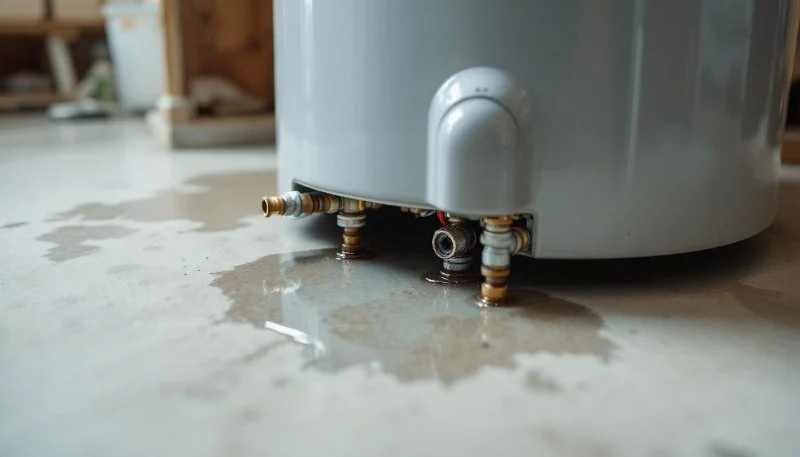
1. Understanding Water Heater Leaks
Water heater leaks are a common issue that homeowners may face, often causing both inconvenience and potential water damage. Understanding the causes and how to address them quickly is essential for avoiding costly repairs and maintaining the longevity of your water heater.
1-Tom-Plumber
1840 Airport Exchange Blvd Suite 180, Erlanger, KY 41018, USA
2. Common Causes of Water Heater Leaks
Several factors can contribute to water heater leaks. The most common causes include:
- Corrosion: Over time, water heaters may develop rust due to the natural wear and tear of the tank, leading to leaks.
- Faulty connections: Leaks can occur if the connections to the water heater, such as pipes or fittings, are loose or damaged.
- High water pressure: Excessive water pressure can cause the tank to rupture, leading to leaks around the pressure relief valve or other weak points.
- Overheating: A malfunctioning thermostat or heating element may cause the water to overheat, resulting in pressure buildup and leaks.
- Age of the unit: As water heaters age, the internal components degrade, which can lead to leaks, especially in older models.
3. How to Fix a Leaking Water Heater
If you notice a leak in your water heater, taking quick action is crucial to minimize water damage. Here's a step-by-step guide on how to address a leaking water heater:
- Step 1: Turn off the power supply: For electric water heaters, switch off the power at the breaker box. For gas water heaters, turn off the gas supply.
- Step 2: Turn off the water supply: Locate and shut off the main water valve to stop the flow of water to the heater.
- Step 3: Inspect the leak: Check for the source of the leak. It may be coming from the pressure relief valve, the water connections, or the tank itself.
- Step 4: Fix the leak: If the leak is coming from a valve or pipe, tightening or replacing the affected part may be enough. If the tank is leaking due to corrosion, you may need to replace the entire water heater.
- Step 5: Test the system: After repairs, turn the water supply and power back on, and check for any further leaks or issues.
4. Prevention Tips to Avoid Future Leaks
Preventing water heater leaks is essential to ensure that your appliance works effectively for years. Here are a few tips to help you avoid leaks in the future:
- Regular maintenance: Have your water heater inspected annually by a professional plumber to catch any potential issues early on.
- Monitor water pressure: Ensure that the water pressure in your home is within the recommended range (typically 40 to 60 psi) to prevent strain on the water heater.
- Flush the tank: Sediment buildup in the tank can cause damage over time. Regularly flush your water heater to prevent sediment from accumulating.
- Install a water softener: If you live in an area with hard water, installing a water softener can help reduce mineral buildup and extend the life of your water heater.
5. Plumbers Supply Hub Recommendations for Water Heater Repairs
If you're dealing with a leaking water heater or need to replace your unit, visit Plumbers Supply Hub for all your plumbing needs. We offer a variety of water heaters, parts, and tools to help you with repairs or replacements. Whether you need a new tank or just some replacement fittings, Plumbers Supply Hub has everything you need to get your system back in working order.
 All Plumbing Services5.0 (10 reviews)
 Aero Plumbing & Heating Co4.0 (4 reviews)
 Gopar's Plumbing5.0 (25 reviews)
 Sos Drain & Sewer Services Inc4.0 (39 reviews)
 Goss Plumbing, Inc.4.0 (79 reviews)
 Belknap Plumbing4.0 (95 reviews)
 How to Replace a Shower Drain: A DIY Plumbing Project
 How to Repair a Pipe Saddle That Leaks: Complete Guide
 How to Replace a Sink Overflow Tube: A Complete Step-by-Step Guide
 How to Replace a Tub Drain With Hair Trap Feature
 How to Install a Pot Filler Faucet in the Kitchen: A Step-by-Step Guide
 How to Test Pressure Drop in a Long Pipe Run: Effective Methods for Accurate Results