
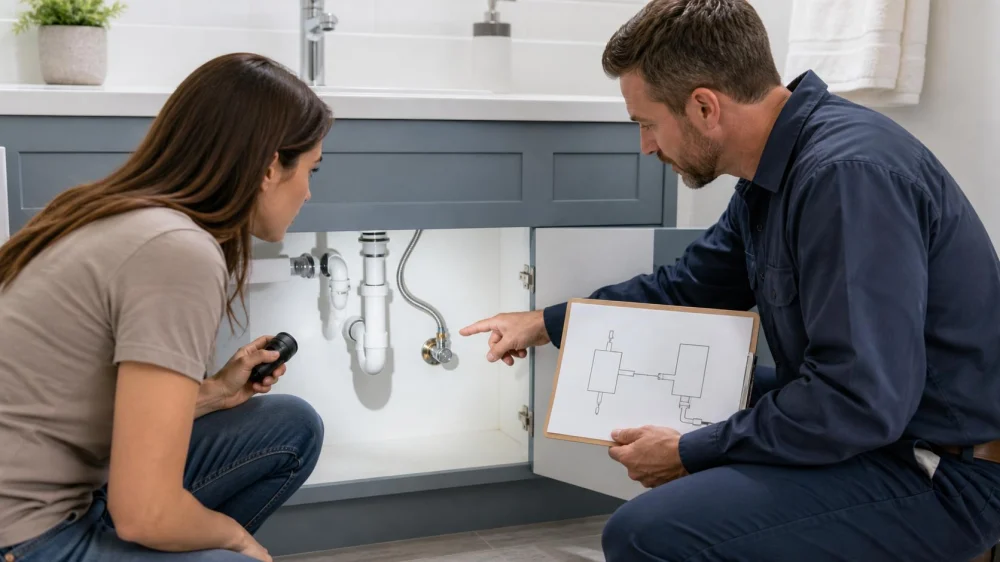
Stuck Fixture Shutoff Valve: Do Not Force the Handle
On this page
- Understand the valve's purpose
- Check for an active leak first
- Identify the valve without disassembly
- Inspect the area visually
- Avoid force and unapproved lubricants
- Know the main shutoff plan
- Prepare for a plumber
- Plan valve replacement
- Test new work carefully
- Prevent future access problems
- Stuck valve checklist
A fixture shutoff valve controls water to a sink, toilet, dishwasher, refrigerator, washing machine, or another appliance. When its handle will not turn, forcing it can break the stem, damage a corroded connection, or create a leak in a confined cabinet. Stop and plan the isolation before applying more pressure.
This guide focuses on observation and preparation, not internal valve repair. Plumbing materials, water pressure, building age, and local codes vary. A licensed plumber should handle a seized, leaking, corroded, inaccessible, or uncertain valve, especially when the main supply cannot be closed reliably.
Place a shallow empty tray nearby only if the cabinet is dry and doing so does not move the piping. A tray can reveal a slow drip while you wait, but it does not control pressure or replace repair. Check it regularly and keep stored items away.
Understand the valve's purpose
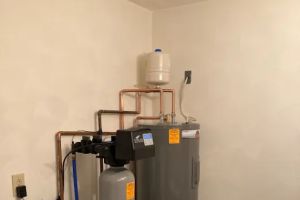
Fixture stops allow a local item to be serviced without shutting water to the entire property. A sink commonly has separate hot and cold stops; a toilet usually has one; an appliance line may connect under a sink, behind equipment, or at a wall box.
Some handles turn several rotations, while quarter-turn valves move only a short distance. Do not infer the direction or travel from handle shape alone. Older installations may include valves that no longer seal even when the handle moves.

Swell Plumbing Inc
San Juan CapistranoOrange CountyCalifornia
33208 Paseo Cerveza Unit A1, San Juan Capistrano, CA 92675, USA
Check for an active leak first
Look and listen for spraying, dripping, pooling, cabinet swelling, wall moisture, or continuous flow. If water is contacting electrical equipment, outlets, or wiring, keep away, do not touch wet electrical items, and use emergency electrical and plumbing help.
For a significant uncontrolled leak, use the known safe main shutoff if you can reach and operate it without entering water or electrical danger. Contact the water utility, building manager, or emergency plumber when the correct shutoff is unknown or inaccessible.
Identify the valve without disassembly
Trace the visible supply tube from the fixture to the valve and wall or floor. Note whether it serves hot water, cold water, an appliance, or a toilet. Photograph the full area, connection, handle, and any label.
Do not remove a handle, packing nut, supply tube, or wall cover while the line remains pressurized. A valve that looks closed may not hold. Identification should not disturb a connection you are trying to preserve until isolation is confirmed.
Inspect the area visually
Use a flashlight to look for green or white deposits, rust, cracking, staining, wetness, damaged tubing, bent handles, and movement where the valve enters the wall. Place a dry paper towel beneath the area to reveal a fresh drip without wrapping or pressing the joint.
Check access. Stored chemicals, drawers, shelving, and appliances may prevent safe work. Clear belongings only when they are dry and uncontaminated. Do not move a heavy connected appliance or strain a rigid pipe.
Avoid force and unapproved lubricants
Do not extend the handle with pliers, a wrench, pipe, or other lever. Added torque can shear a small stem or twist piping hidden in the wall. Stop if the entire valve or pipe moves, the handle bends, or moisture appears.
Do not spray penetrating oil, cleaner, or household lubricant onto potable-water connections without professional and product approval. Chemicals may damage seals, contaminate surfaces, or obscure evidence. A plumber can decide whether the valve can be serviced or should be replaced.
Know the main shutoff plan
Locate the property's main water shutoff and any unit or branch valve before local work. Confirm ownership and authorization in apartments, condominiums, and shared buildings. Some utility-side valves may be restricted to utility personnel.
Do not test an old main valve casually during an active emergency if failure would make conditions worse. Ask a plumber to assess it during a planned visit. Keep the location clear, lit, labeled, and accessible to authorized adults.
Prepare for a plumber
Record the fixture, valve location, handle behavior, leak status, visible material, pipe size if known, building age, and whether water can be isolated. Send clear photos through the company's secure process. Mention tight cabinetry or an appliance blocking access.
Ask whether the visit will require a building shutdown, utility coordination, wall access, appliance movement, or replacement supply tube. Notify affected residents and protect the work area. Keep pets and children away.
Plan valve replacement
The plumber should select a valve and connection compatible with the existing pipe, pressure, fixture, code, and access. Ask whether the supply connector should be replaced at the same time and whether a quarter-turn design is appropriate.
Confirm scope, shutdown duration, wall or cabinet impact, cleanup, parts, price, warranty, and responsibility for restoration. Hidden corrosion may change the work once pressure is off and the connection is exposed; require a written change before added non-emergency work.
Test new work carefully
After service, the plumber should restore water gradually, operate the valve, run the fixture, and inspect every disturbed connection under pressure. Ask the plumber to demonstrate the normal open and closed positions without over-tightening.
Dry the area and recheck after several uses. Watch for small beads of water, staining, odor, cabinet swelling, or pressure changes. Contact the plumber promptly if leakage or abnormal operation returns.
Prevent future access problems
Keep the valve visible and do not pack the cabinet tightly around it. Label hot, cold, appliance, and main valves discreetly. Store a photo and service date in the home's plumbing record.
Ask a plumber whether and how each valve should be exercised during routine maintenance. Do not create a universal turning schedule for old or fragile valves. A planned assessment is safer than discovering a seized stop during a leak.
Stuck valve checklist
Identify the fixture, check for active water and electrical danger, photograph the valve, clear safe access, locate the authorized main shutoff, and stop before using extra force, tools, chemicals, or disassembly. Call a qualified plumber.
A stuck handle is a warning about the isolation system, not a challenge to turn harder. Planning the main shutdown and replacement protects the hidden pipe and gives the plumber control of pressure before a small maintenance problem becomes an uncontrolled leak.
 Garrels Company5.0 (9 reviews)
 Mr. Rooter Plumbing of Northwest Indiana4.0 (353 reviews)
 Royal Flush Plumbing4.0 (74 reviews)
 Maximum Flush Sewer and Drain5.0 (19 reviews)
 Pro Plumbers Inc Long Beach, CA4.0 (144 reviews)
 JOSH-ROOTER Plumbing and Sewer5.0 (152 reviews)
 Why Your Water Heater Is Leaking and How to Fix It
 How to Maintain Your Plumbing System to Avoid Costly Repairs
 How to Prevent Clogged Drains: Everyday Habits You Should Adopt
 How to Fix a Sink That Squirts Water When Used
 How to Fix a Leaky Showerhead in Just a Few Steps
 Step-by-Step Guide to Installing a Radiant Floor Heating Plumbing Loop