
Plumbing Cleanout Guide: Locate, Label, and Keep Access Clear
On this page
- Quick answer
- What a plumbing cleanout does
- Common cleanout locations
- Identify a cleanout carefully
- Create a home plumbing access map
- Keep safe working clearance
- Protect exterior cleanouts
- Protect indoor cleanouts
- Check caps without opening them
- What to do during a backup
- Help the plumber prepare
- Plan around remodeling and landscaping
- Annual cleanout checklist
- Frequently asked questions
- Next steps
Quick answer
A plumbing cleanout is a capped access point that lets a plumber inspect or clear part of a drain or sewer line. It may be in a basement, crawlspace, utility area, garage, outside wall, planting bed, yard, or near the property line. Homes can have several cleanouts serving different branches.
Locate and photograph accessible cleanouts before an emergency, but do not open a cap yourself. A blocked line may hold pressurized sewage that can spill when the cap is loosened. Keep boxes, concrete, decks, deep mulch, shrubs, soil, and vehicles away from the access area. Label its location on a private home map and give the plumber information about backups, fixture use, prior repairs, and utility locations.

What a plumbing cleanout does
Drain and sewer piping needs access for inspection, cable machines, jetting equipment, locating tools, and cameras. A cleanout provides a planned entry point without removing a toilet or cutting a pipe.
Cleanouts can serve a single branch, a building drain, or the main line toward the public sewer or septic system. Their direction and reach depend on pipe layout, fittings, building code, and installation.
A cap normally remains closed and sealed. It is not a drain, vent, hose connection, or routine place to pour chemicals. Opening it is a service task because conditions behind the cap are unknown.
Access does not guarantee that every blockage can be reached from that point. A plumber may need another cleanout, roof vent access where appropriate, fixture removal, excavation, or additional diagnosis.
Common cleanout locations
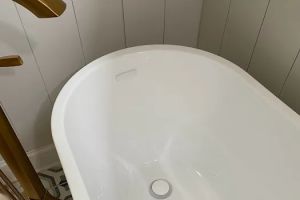
Inside, look near where the building drain exits the foundation, at the base of vertical drain stacks, in mechanical rooms, basements, crawlspaces, garages, utility closets, or behind removable access panels.
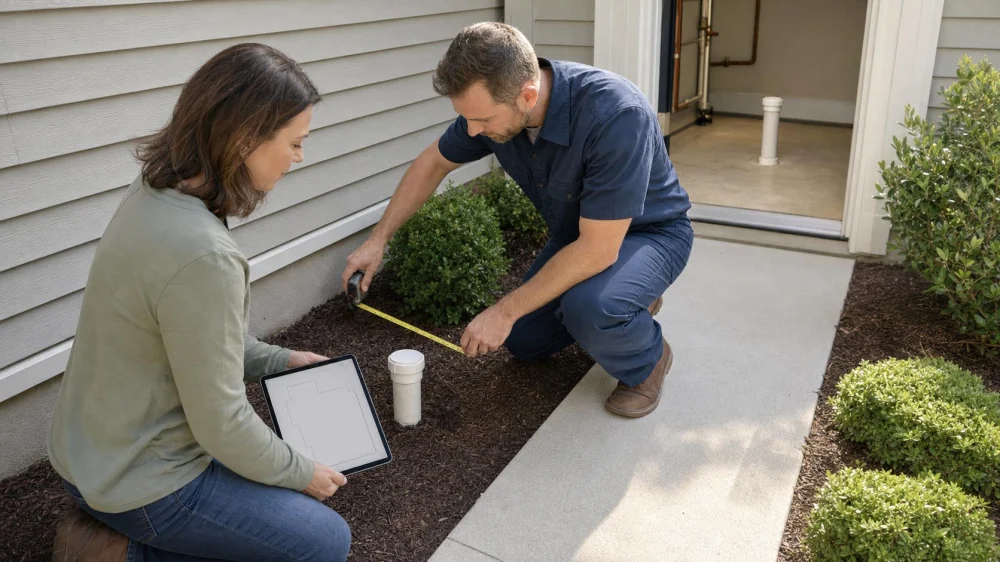
Outside, a cleanout may appear as a capped pipe close to the foundation, along the sewer route, near a driveway or walkway, in a planting bed, or near the property line. It may sit above grade or inside a protective box.
Some systems have paired exterior cleanouts pointing in opposite directions. Others have a single fitting. Septic systems may include inspection ports and tank access that are not the same as a sewer cleanout.
Older homes may have hidden, damaged, buried, or missing access. Remodeling can conceal a once-visible fitting. A plumber can use records, pipe tracing, cameras, and locating equipment to investigate.
Identify a cleanout carefully
A cleanout often has a threaded or mechanically secured cap on a drain-size pipe. Materials may include plastic, cast iron, brass, or other approved components. Shape and color are not definitive.
Do not confuse it with a water shutoff, gas valve, irrigation valve, backwater valve access, sump lid, septic tank lid, floor drain, electrical conduit, survey marker, or utility-box cover.
Photograph the object and its surroundings without moving it. Note pipe diameter, material, nearby fixtures, and distance from fixed landmarks. Ask a licensed plumber to confirm uncertain components.
Never probe, strike, drill, or twist an unknown cap. Damaged gas, electrical, water, sewer, or septic components can create serious hazards.
Create a home plumbing access map
Make a simple private diagram of the building footprint and yard. Mark confirmed cleanouts, main water shutoff, sewer or septic direction, sump system, floor drains, utility rooms, and known access panels.
Measure each location from two fixed points, such as a foundation corner and door. A photo alone may become useless after snow, plant growth, stored items, or renovation changes the view.
Record the date, who confirmed the cleanout, cap condition, pipe material if known, and previous service. Keep plumber invoices and camera reports with the map.
Do not post detailed utility and access maps publicly. Store a copy with home records and make it available to occupants or authorized service providers.
Keep safe working clearance
Ask a plumber how much room equipment needs around each cleanout. A cable machine, hose, camera reel, or excavation requires more than enough space to see the cap.
Keep the route from the street or service vehicle to the cleanout clear. Narrow gates, stairs, low branches, stored bicycles, and fragile flooring can prevent safe equipment movement.
Provide lighting and dry footing without running improvised extension cords through water. Pets and children should remain away from the work zone.
Do not build permanent cabinets, walls, decks, patios, or heavy shelving over a cleanout without code-compliant access planned by qualified professionals.
Protect exterior cleanouts
Keep soil, sod, mulch, gravel, roots, and plants from burying the cap. A shallow protective box or approved marker may help where permitted, but it must not hold water or transfer vehicle weight to the pipe.
Do not strike the cleanout with a mower, string trimmer, shovel, snowplow, or vehicle. Use a visible but discreet marker appropriate for the site.
Keep large shrubs and trees far enough away to preserve access and reduce root conflict. Root-management decisions should consider the plant and piping with qualified landscape and plumbing advice.
If the cleanout is in a driveway or traffic area, ask a plumber about a traffic-rated enclosure. A thin decorative cover is not a substitute for engineered load protection.
Protect indoor cleanouts
Do not stack boxes, appliances, chemicals, or furniture in front of the cap. Leave room for the plumber and for containment if sewage is present.
Use removable, clearly documented access panels when a cleanout is behind a finished surface. Decorative panels should not require demolition or special tools unavailable during an emergency.
Protect nearby belongings from potential splash and equipment traffic, but do not wrap or seal the cleanout in a way that hides leakage. Watch for stains, corrosion, odor, dampness, or a loose-looking cap.
A finished basement should include a route for service equipment and cleanup. Discuss flooring protection and sanitation with the plumbing company before work begins.
Check caps without opening them
From a safe distance, look for cracks, missing pieces, corrosion, staining, moisture, roots, soil movement, or sewage odor. Compare with prior photos.
Do not apply a wrench, lubricant, sealant, tape, or glue. An overtightened, cross-threaded, corroded, or improvised cap can break the fitting or make future access difficult.
If a cap appears loose, damaged, leaking, or displaced, keep people away and call a plumber. Avoid touching wastewater or contaminated surfaces.
A dry-looking cap does not prove the line is clear. Cleanouts are access points, not sensors. Drain behavior and professional inspection provide additional information.
What to do during a backup
Stop using plumbing fixtures that may add water to the affected line. If multiple lower-level drains or toilets are backing up, avoid running sinks, showers, dishwashers, or washing machines until a plumber advises it is safe.
Keep people and pets away from wastewater. Wear appropriate protection only for actions you are trained to perform, and avoid contact with electrical devices in wet areas.
Do not open the cleanout to “relieve pressure.” Sewage may discharge suddenly, and the cap can be difficult to replace. Do not pour drain chemicals into fixtures or the cleanout.
Call a licensed plumber or emergency plumbing service. Tell them which fixtures are affected, when the problem began, whether sewage is present, and whether the property uses a public sewer or septic system.
Help the plumber prepare
Send clear photos of the cleanout and access route. Share approximate pipe material and diameter if professionally confirmed, building age, prior blockages, recent construction, trees near the line, and any sewer-camera records.
Describe the pattern: one fixture, one room, lower-level fixtures, or the entire house. Note gurgling, odor, slow drainage, backups, and recent heavy water use.
Ask what clearance and parking the crew needs, whether water service must be shut off, how wastewater will be contained, and whether cleanup is included.
Confirm scope and pricing before work when the situation allows. Clearing a line, camera inspection, locating, excavation, repair, and sanitation are separate services in many proposals.
Plan around remodeling and landscaping
Before closing walls or ceilings, photograph cleanouts with measurements and ensure code-compliant access remains. Give the final map to the homeowner and building records.
Before paving, decking, grading, or planting, identify sewer routes and cleanouts. Extending or relocating access may require permits and licensed plumbing work.
Do not raise soil or mulch over an exterior cap. Grade changes can bury access or direct water toward the pipe opening.
After construction, inspect access locations for damage, debris, and lost clearance. Update the map and photographs.
Annual cleanout checklist
- Confirm each mapped location remains visible and accessible.
- Photograph the cap and surrounding area.
- Check visually for cracks, corrosion, leakage, odor, or soil movement.
- Remove movable storage from the required service area.
- Trim vegetation without damaging the pipe.
- Keep vehicles and heavy loads away unless protection is traffic-rated.
- Verify that access panels open without demolition.
- Update measurements after landscaping or remodeling.
- Keep plumber and sewer or septic information with the map.
- Call a professional instead of opening a suspicious cap.
Frequently asked questions
Can I open a cleanout to see whether it is clogged?
That is unsafe. A blocked line may release pressurized sewage. A plumber has the tools, containment, and experience to assess the cap and line.
Does every house have a cleanout?
Requirements and installations vary by age, location, and plumbing layout. Some homes have several; older systems may have concealed or inadequate access.
Can a cleanout be buried?
It may become buried through grading or landscaping, but accessible service points should not be intentionally concealed. Ask a plumber to locate and restore approved access.
Is the cleanout the same as the main water shutoff?
No. A cleanout accesses drainage piping. The main shutoff controls pressurized water supply. Do not operate an unidentified component.
Should I label a cleanout in the yard?
A discreet site-appropriate marker and private map can help. Avoid creating a trip hazard or exposing detailed utility information publicly.
Next steps
Walk the property without opening anything, photograph likely access points, and ask a licensed plumber to confirm them. Measure from fixed landmarks, create a private map, clear service space, and protect each location during storage, landscaping, and remodeling.
This guide provides general access planning. Plumbing configuration, sanitation, code, and safe service methods require site-specific professional evaluation.

 Plumbing Experts2.0 (3 reviews)
 American Leak Detection of St. Louis4.0 (25 reviews)
 Big John’s Plumbing4.0 (132 reviews)
 R G Cook Plumbing & Heating5.0 (10 reviews)
 Springboro Plumbing & Drain4.0 (98 reviews)
 Jim Dhamer Plumbing and Sewer Inc.4.0 (171 reviews)
 How to Troubleshoot Plumbing Leaks in Your Bathroom Effectively
 How to Replace a Plumbing Vent Cap on the Roof | Plumbers Supply Hub
 How to Replace Your Water Heater’s Thermostat for Better Performance
 How to Repair a Crack Around a Bathtub Rim: A Step-by-Step Guide
 How to Install a Showerhead and Boost Bathroom Water Flow Guide
 How to Repair a Slab Leak Under the Floor: Step-by-Step Expert Guide