
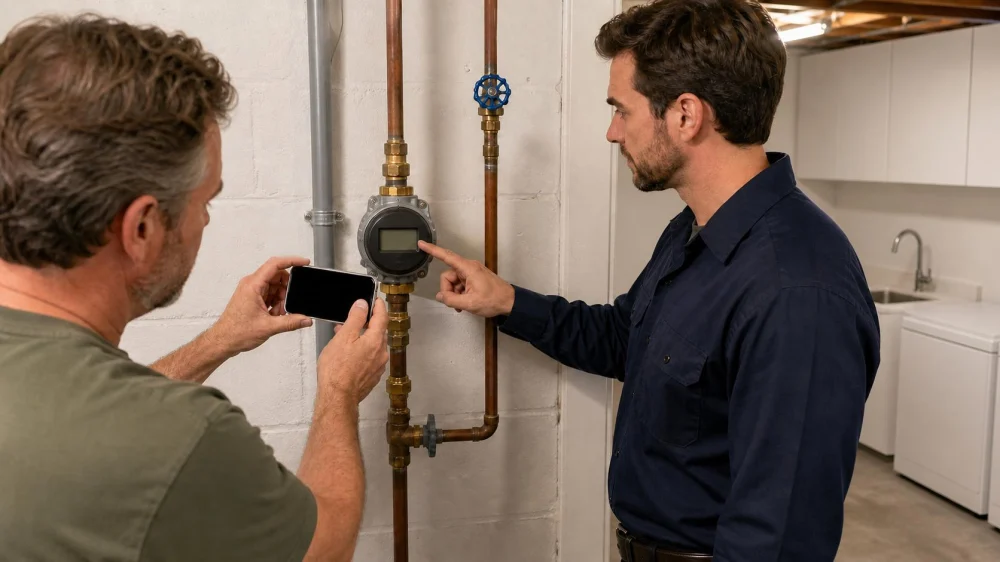
Water Meter Leak Check: Stop Use and Record the Reading
A water meter can show that water is moving somewhere after it enters the property, but it cannot identify the fixture or pipe responsible. A controlled no-use check helps distinguish ordinary consumption from unexplained flow. Coordinate the household, verify that automatic equipment is quiet, read the correct meter safely, then compare later without operating valves you do not own.
Quick answer
Choose a period when no one needs water. Turn off faucets and confirm toilets, ice makers, irrigation, humidifiers, softeners, filtration regeneration, pools, and appliances will not run. Photograph the meter reading and leak indicator without touching utility seals or valves. Avoid all water use for about two hours, then photograph it again. EPA WaterSense says any change probably indicates a leak. Recheck the no-use conditions and call the water utility or plumber to locate it.
McDonough’s - MN Drain Cleaning Services
Saint PaulRamsey CountyMinnesota
1307 Sylvan St #4605, St Paul, MN 55117, USA
Prepare a true no-use period
Tell every occupant the start and end time. Do not run sinks, toilets, showers, laundry, dishwasher, hose bibbs, drinking-water systems, or pet-water devices during the test. Keep emergency water access available; postpone the test if someone may need it.
Check automatic uses: irrigation schedules, ice makers, water softener regeneration, reverse-osmosis flushing, humidifiers, evaporative coolers, pool fill valves, boilers, and appliances. Pause them only according to manufacturer instructions and remember to restore settings.
Do not shut down fire sprinklers, medical equipment, necessary sanitation, or building systems. Multifamily and shared-meter properties need management coordination.

Cockrum Plumbing
MorristownHamblen CountyTennessee
5231 W Andrew Johnson Hwy, Morristown, TN 37814, USA
Locate and access the meter safely
The meter may be inside a basement or utility area, in an exterior box, or near the curb. Confirm the correct meter with the utility bill, property records, or utility. Do not enter traffic or another property.
Before opening an exterior box, watch for insects, spiders, snakes, sharp edges, standing water, unstable lids, and electrical hazards. Use the utility’s approved method; some covers are heavy or restricted.
Do not break seals, disconnect wires, remove modules, or operate the utility-side shutoff. If access is unsafe, call the utility.
Record the first reading
Photograph the entire display straight on with enough context to identify the meter. Record all digits and units exactly as shown; do not assume gallons versus cubic feet. Note the date and time.
Some meters have a small flow or leak indicator, while smart meters cycle through screens. Follow utility instructions for that model without pressing sealed controls.
Also record whether the indicator is moving immediately. Very slow movement may be easier to confirm by comparing photographs.
Wait without using water
EPA WaterSense recommends comparing the meter before and after a two-hour period when no water is used. Keep the no-use notice visible and avoid flushing a toilet out of habit.
Monitor for obvious active leaks without opening walls or touching wet electrical areas. If water is damaging the building, do not wait for the test to finish; use the known safe property shutoff if appropriate and call a professional.
At the end, photograph the display from the same angle and restore any safely paused equipment.
Interpret movement carefully
If the reading or indicator changed, water probably moved through the meter. First confirm that no occupant, appliance, irrigation zone, softener, ice maker, or refill valve operated.
A meter check does not locate the leak or prove whether it is inside, underground, in irrigation, or in equipment. Repeating a well-controlled test can help, but ongoing flow or property damage deserves prompt action.
No movement during one window does not rule out an intermittent toilet, irrigation, appliance, pressure-related, or weather-dependent leak. Compare bills and alerts over time.
Look for visible clues
Check toilet tanks and bowls, faucet outlets, exposed supply connections, appliance hoses, water heater pans, under-sink cabinets, exterior hose bibbs, irrigation boxes, and landscape areas for moisture or sound.
Look for stains, soft materials, peeling finishes, mildew odor, unexpected plant growth, soggy ground, pavement flow, or a warm floor area. Do not cut walls, dig, or crawl into unsafe spaces.
Keep children and pets away from mold, sewage, standing water, and damaged surfaces. Call emergency professionals for electrical risk, structural damage, sewage, or major flooding.
Know whom to call
The water utility can explain the meter, high-use alerts, ownership boundary, and whether it offers leak adjustments. A licensed plumber can isolate fixtures and building piping. Irrigation or pool professionals may be needed for specialty systems.
Provide both meter photos, units, time interval, no-use checklist, bill history, visible clues, and recent plumbing changes. Do not ask a contractor to guess from one cropped number.
After repair, repeat the controlled check and save invoices, findings, and photographs.
Frequently asked questions
How long should I wait?
EPA suggests a two-hour no-use comparison. Utility-specific guidance may differ.
Can I close the curb valve?
Do not operate utility-owned or sealed equipment. Use only a known property shutoff when safe and authorized.
Does a moving meter identify the leak?
No. It shows flow; further isolation and inspection are needed.
What if the meter does not move?
Intermittent leaks may be absent during the test. Review bills, alerts, toilets, irrigation, and appliances.
Next steps
Plan a two-hour no-use window, list automatic water users, safely photograph the correct meter before and after, and preserve both readings. If it changes, confirm the test conditions and contact the utility or plumber with the evidence.
Repeat the comparison after any repair or adjustment, using the same disciplined no-use setup. Keep the new photographs beside the original pair so the utility or contractor can compare dates, units, and total change. Continue watching bills and smart-meter alerts for several cycles because an intermittent toilet, irrigation valve, appliance, or underground line may not run during a single test window.
See EPA WaterSense Fix a Leak Week guidance for the official meter-check method.
 Mr. Rooter Plumbing of Hendersonville4.0 (649 reviews)
 Roto-Rooter Plumbing & Water Cleanup4.0 (887 reviews)
 G & R Plumbing Inc3.0 (72 reviews)
 Rescue Plumbing4.0 (84 reviews)
 Wellington Sewer & Drains LLC4.0 (8 reviews)
 Local 5724.0 (53 reviews)
 How to Clean Sediment Build-Up in Household Pipes
 How to Test Your Plumbing for Hidden Leaks and Save Money
 How to Clear Stubborn Hair Clogs from Bathroom Drains – Effective Solutions
 How to Replace a Float Valve in a Rain Barrel System
 How to Eliminate Corrosion in Hard Water Homes
 How to Choose Fixtures for a Water-Smart Bathroom