
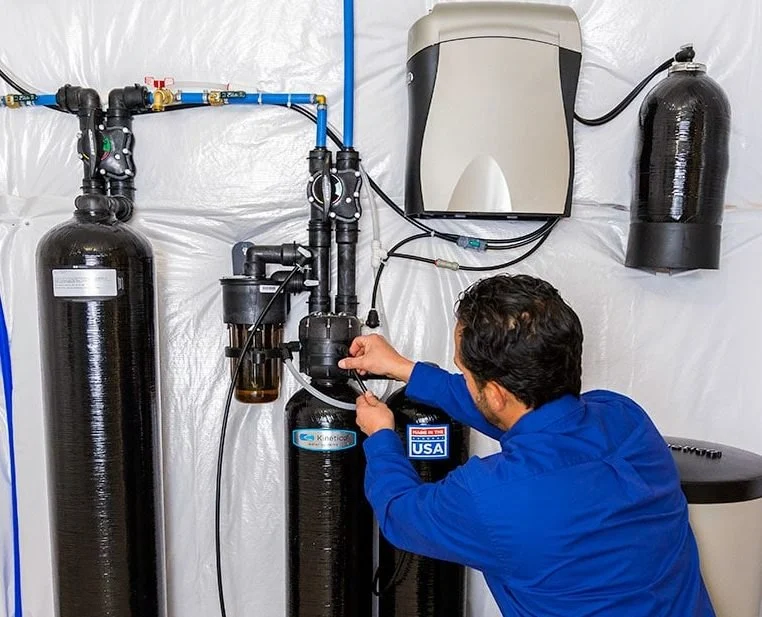
- 1-Understanding How Your Water Softener Works
- 2-Common Water Softener Issues
- 3-How to Troubleshoot Your Water Softener
- 4-Maintaining Your Water Softener for Longevity
- 5-Plumbers Supply Hub Recommendations for Water Softener Repair
1. Understanding How Your Water Softener Works
Water softeners are essential for reducing hard water problems by removing minerals like calcium and magnesium. These minerals cause scale buildup in pipes, appliances, and fixtures, leading to costly repairs and inefficient water usage. A water softener uses a process called ion exchange, where hard water minerals are replaced with sodium or potassium ions to prevent scale buildup.
Understanding the basics of how your water softener works can help you identify potential problems. Whether you use a salt-based softener or a salt-free system, knowing the components and the process involved can make troubleshooting much easier when issues arise.

2. Common Water Softener Issues
If your water softener isn’t working as expected, there are several common issues that could be causing the problem. These include:

Zoom Drain Los Angeles
TorranceLos Angeles CountyCalifornia
1815 W 205th St #209, Torrance, CA 90501, USA
2.1 Salt Bridges
A salt bridge is a crust of salt that forms in the brine tank and prevents the softener from regenerating properly. This occurs when moisture gets trapped in the tank, causing the salt to harden and form a barrier. As a result, the water softener can’t draw the salt needed for regeneration, and your water will remain hard.
2.2 Clogged Resin Bed
The resin bed inside your water softener is responsible for removing the hard minerals from the water. Over time, it can become clogged with dirt, debris, or iron buildup, preventing the ion exchange process. This reduces the softener’s efficiency and may cause water quality to deteriorate.
2.3 Empty Salt Tank
One of the most common issues with water softeners is running out of salt. If the brine tank is empty, the softener can’t regenerate the resin beads and, as a result, won’t soften your water. Regularly check and refill the salt tank to ensure smooth operation.
2.4 Malfunctioning Control Valve
The control valve regulates the flow of water through the softener and controls regeneration cycles. If the control valve malfunctions, the softener may not regenerate properly or may fail to cycle completely, leaving your water untreated.
3. How to Troubleshoot Your Water Softener
If your water softener isn’t working properly, follow these steps to troubleshoot the issue:
3.1 Check the Salt Level
Start by checking the salt level in the brine tank. If the tank is empty or nearly empty, refill it with the appropriate type of salt. Be sure to use high-quality, recommended salt for your specific water softener model.
3.2 Inspect for Salt Bridges
If your softener isn’t working despite having enough salt, look for signs of a salt bridge. You can break up the bridge with a broomstick or other long object to loosen the hardened salt. Once the bridge is removed, check for normal salt usage and flow.
3.3 Clean the Resin Bed
If your resin bed is clogged, it’s important to clean it. You can use a cleaning solution specifically designed for resin beds to remove debris and mineral buildup. If this doesn’t solve the problem, it may be time to replace the resin bed altogether.
3.4 Check the Control Valve
Inspect the control valve to ensure it’s functioning properly. If it’s not cycling as it should, you may need to replace the valve or the timer associated with the regeneration cycle. Consult your user manual or a professional technician for guidance.
3.5 Test the Water Quality
If you’re unsure whether the softener is working, test the hardness of your water. If the water remains hard after the softener has cycled, you may need to perform a full reset or call a professional for repairs.
4. Maintaining Your Water Softener for Longevity
Proper maintenance is key to ensuring that your water softener continues to function efficiently and lasts for many years. Here are some tips for maintaining your system:
4.1 Regularly Refill the Salt Tank
Check the salt level in the brine tank at least once a month. Refilling the tank regularly ensures that your softener can regenerate properly and continue to remove hard minerals from the water.
4.2 Clean the System Annually
To prevent buildup and ensure optimal performance, clean your water softener once a year. This includes checking the resin bed, flushing the system, and ensuring that the control valve is operating correctly.
4.3 Use the Right Salt
Always use high-quality salt that’s appropriate for your water softener model. Using the wrong type of salt can lead to clogs and poor performance. Check the manufacturer’s recommendations for the best salt for your system.
5. Plumbers Supply Hub Recommendations for Water Softener Repair
If you’re experiencing issues with your water softener and need parts or services, Plumbers Supply Hub is your go-to source for quality products and expert recommendations. From replacement resin beads and control valves to water softener cleaning solutions, we offer everything you need to maintain or repair your system.
Visit Plumbers Supply Hub today for top-rated water softener products and professional services to keep your system in top condition!
 Right Flow Plumbing4.0 (31 reviews)
 Mike Lowry Plumbing LLC4.0 (41 reviews)
 Janesville Plumbing, LLC4.0 (87 reviews)
 Elite Plumbing Solutions5.0 (6 reviews)
 Ballard's Plumbing, Heating, and Air Conditioning4.0 (353 reviews)
 Howe Brothers Plumbing LLC4.0 (63 reviews)
 How to Replace an In-Line Check Valve
 How to Unclog a Shower Drain with a Drain Snake | Plumbers Supply Hub
 What to Do When Your Bathtub Drains Slowly: Solutions and Tips
 How to Replace an Adjustable Shower Slide Bar | Plumbers Supply Hub
 How to Replace a Showerhead: Easy DIY Plumbing Fix for Homeowners
 How to Prevent Water Heater Leaks with Regular Maintenance