
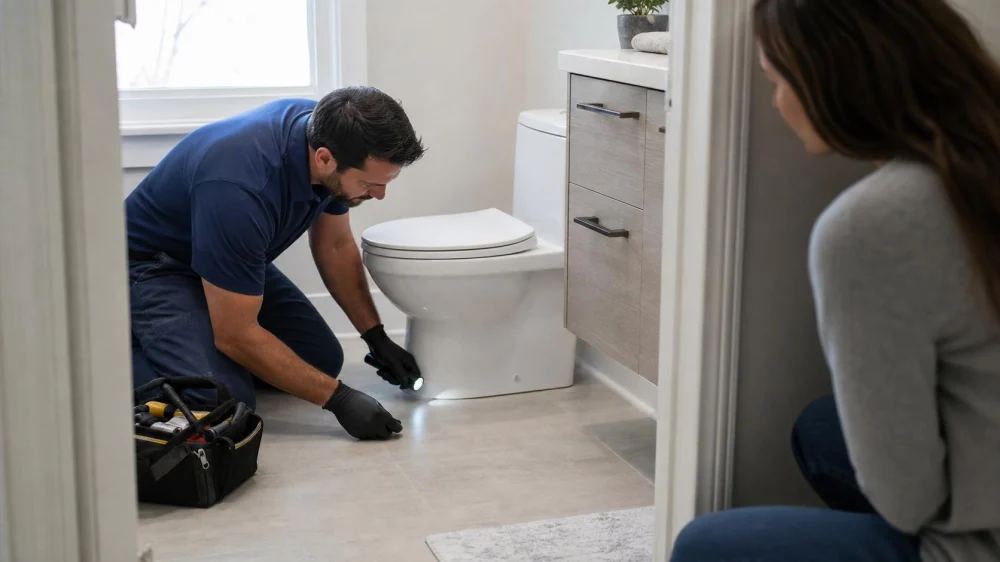
Water Around Toilet Base: Stop Use and Trace the Pattern
Table of contents
Quick answer: Water at a toilet base can come from the supply connection, tank hardware, condensation, cleaning, splashing, or a failed bowl-to-drain seal. Stop using the toilet if water appears during a flush, the fixture rocks, the floor feels soft, or the water may be contaminated. Photograph the pattern, dry the area safely, and call a plumber rather than repeatedly testing it.
Respond before diagnosing
Keep people and pets away from the wet floor. Do not assume clear, odorless water is clean. If moisture appears after a flush or the source is unknown, avoid spreading it with shoes, towels, or tools.
If supply water is actively flowing and the local shutoff is confirmed and safe, close it gently. Do not force a stuck valve. If the valve is uncertain, water nears electricity, a ceiling is wet, or flow continues, leave and call the appropriate help.
Do not caulk over the wet joint, tighten random bolts, add sealant to the supply line, or keep flushing to find the source. These actions can hide the pattern, crack porcelain, damage parts, or release more water.

Mr. Rooter Plumbing of Pomona Valley
PomonaLos Angeles CountyCalifornia
300 S Park Ave Suite 825, Pomona, CA 91766, USA
Dry, document, and observe
Take a wide photo and a close view of the moisture edge. Note water at the front, rear, shutoff, hose, tank hardware, or wall. Record the time and preceding flush, shower, cleaning, humidity, or idle period.
Remove visible water without pushing it under the toilet or into seams. Follow public-health guidance if wastewater is possible. Separate contaminated material from laundry and wash hands after removing gloves.
Once dry, observe without flushing. Place separate dry indicators near the supply, tank, and base to see where moisture returns. Do not dismantle the fixture. Idle moisture points toward supply, tank, condensation, or another nearby source.
Compare likely water sources
Supply connection: Moisture may begin at the shutoff valve, hose, or fill-valve connection and travel along porcelain before reaching the floor. The visible puddle may be far from the actual drip.
Tank or tank hardware: Water can escape at bolts, a tank-to-bowl connection, a crack, or an overflowing condition. Inspect visually without leaning on the tank or tightening hardware.
Condensation: In warm, humid air, a cold tank or bowl can collect moisture. Condensation is often widespread as droplets rather than a single point, but it can run to the base and imitate a plumbing leak. A plumber can confirm the pattern and discuss contributing conditions.
Cleaning or nearby splashing: Mop water, a shower, sink splash, or a pet bowl can travel toward the toilet. Clean and dry the area, then see whether it remains dry without toilet use.
Bowl-to-drain seal or fixture problem: Water that returns at the base during or shortly after flushing can indicate a failed seal, loose or damaged installation, drain restriction, or cracked fixture. Stop test flushing and arrange inspection.
Know when to stop using the toilet
Stop use when the toilet rocks, water appears with a flush, wastewater is present, drainage backs up, the floor is soft, the ceiling below is wet, porcelain is cracked, or supply cannot be controlled. Use another toilet and post a temporary notice.
A rocking toilet should not be stabilized by overtightening bolts or inserting random shims. Porcelain can crack, and movement may have already affected the seal or floor. A plumber needs to check the flange, fasteners, support, level, seal, and surrounding material.
Prepare a useful plumber handoff
Send photos, timing, location, idle observations, and the flush relationship. Mention recent work, drain problems, movement, floor changes, and whether this is the only or an accessible toilet.
Clear a safe route and remove personal items without disturbing evidence around the base. Ask the plumber to identify the source, inspect affected flooring and connections, explain whether removal is necessary, document damaged parts, and test the completed repair under controlled conditions. If water entered building materials, ask whether drying or restoration assessment is needed.
Frequently asked questions
Can I just replace the seal myself?
The base seal is only one possible source. Removing a toilet involves weight, porcelain, drainage, flange condition, fastening, and sanitation. Correct diagnosis should come first.
Does clear water prove it is a supply leak?
No. Water from a failed base seal may look clear, and supply water can pick up contamination from surfaces. Use timing and professional inspection, not appearance alone.
Will caulk stop a base leak?
Surface caulk does not repair a failed drain seal and may conceal escaping water. Ask the plumber how the fixture should be sealed after the underlying problem is corrected.
Could the water come from the shower?
Yes. Dry both areas and document activity timing, but stop if testing would release more water into the floor or structure.
Next steps
Take photos, stop use when the pattern suggests a flush-related or unsafe leak, and prevent anyone from testing the toilet repeatedly. Contact a plumber with the observation log and request source confirmation, repair options, floor assessment, and a controlled post-repair test. Keep the final invoice and photos with household plumbing records.
 D&B Plumbing, Heating and Cooling4.0 (22 reviews)
 MGA Sewer, Water & Gas Plumbing Contractor 24hr Emergency Services Available 7 Days A Week4.0 (84 reviews)
 American Plumbing4.0 (83 reviews)
 Pearson Plumbing, Cooling and Pest Control4.0 (548 reviews)
 Bayless Plumbing Sewer & Drain LLC4.0 (18 reviews)
 Kent County Plumbing5.0 (36 reviews)
 How to Choose Between Copper vs PEX for Plumbing: A Comprehensive Guide
 How to Replace an In-Wall Shower Drain
 How to Install a New Shower Valve Without Calling a Plumber
 How to Route Plumbing for an Outdoor Grill Station
 The Best Ways to Prevent Clogs in Your Home’s Drainage System Practical Guide
 What to Do When a Toilet Overflows Frequently - Expert Tips