
Toilet Runs Intermittently? Check the Flapper, Chain, and Fill Level
On this page
- Quick answer
- Listen and observe the refill cycle
- Run a tank dye test
- Inspect the flapper or flush seal
- Check the chain and handle
- Check the fill level and overflow tube
- Inspect the supply and shutoff safely
- Match replacement parts to the toilet
- Verify the repair without wasting water
- Know when to call a plumber
Quick answer
A toilet that refills for a few seconds when nobody flushed it is usually losing tank water into the bowl. The falling tank level triggers the fill valve, creating a “phantom flush” sound. A worn or misaligned flapper, dirty flush-valve seat, incorrect chain slack, fill level above the overflow tube, or a failing fill valve are common causes.
Start with a visual check and a food-coloring dye test. Turn off the toilet’s supply before touching tank parts, protect the porcelain lid on a towel, and use manufacturer-matched components. Call a licensed plumber for a shutoff that will not close, cracked porcelain, leakage outside the toilet, a corroded connection, or a problem you cannot isolate.
Listen and observe the refill cycle
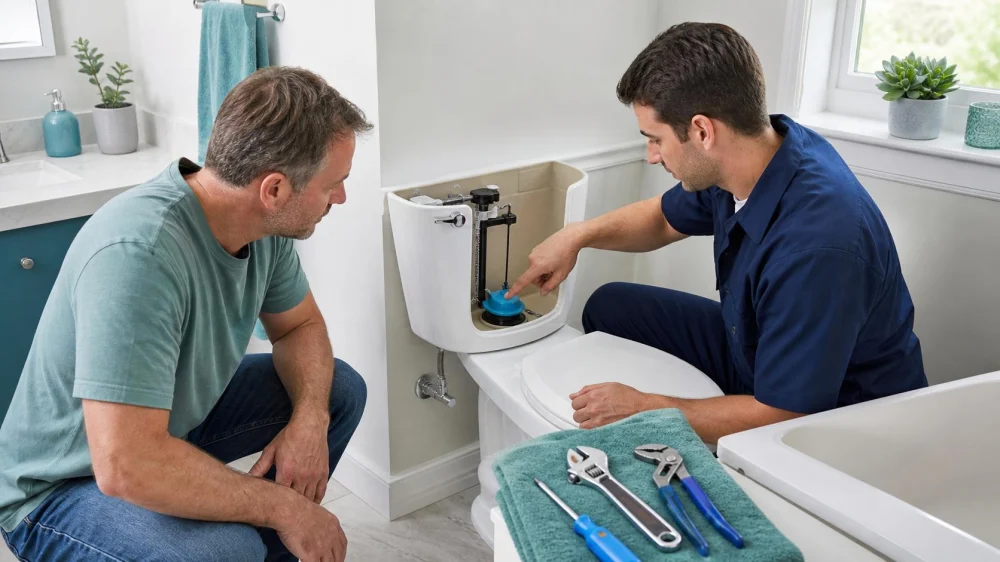
Note the interval between refills and whether the sound comes from the tank, wall, floor, or another fixture. Remove the tank lid with both hands and set it flat on a padded surface. Without touching moving parts, watch the water line after a normal flush. Identify the flapper or canister seal, chain or lift mechanism, fill valve, float, refill tube, and overflow tube.
If water continuously spills into the overflow tube, the issue differs from a slow flapper leak. If the handle stays down or the chain catches after certain flushes, the symptom may be mechanical. Photograph the inside of the tank and model markings before making an adjustment.
Emmons Plumbing and Home Improvement
CallawayFranklin CountyVirginia
2147 Old Forge Rd, Callaway, VA 24067, USA
Run a tank dye test
Let the tank finish filling and stop all flushing. Add a few drops of food coloring or a toilet dye tablet to the tank—not the bowl—without using a cleaner tablet. Wait about 10 minutes or the time directed by the test product. If color appears in the bowl, water is passing the flush seal. Flush immediately afterward so dye does not stain.
EPA WaterSense’s home maintenance guidance recommends this test for silent toilet leaks and identifies worn flappers as a frequent cause. If no dye reaches the bowl but the toilet still runs, observe the overflow level, fill valve, refill tubing, supply connection, and other fixtures.
Inspect the flapper or flush seal
Close the toilet shutoff valve gently, flush to drain most of the tank, and sponge out water only if the planned task requires it. A rubber flapper should lie flat over a clean valve seat without curling, cracks, mineral buildup, swelling, or stiffness. A tower or canister toilet may use a replaceable ring seal instead of a hinged flapper.
Do not scrape porcelain or plastic with a metal tool or use a chemical that can damage seals. Wipe accessible deposits with a material approved by the manufacturer. If the seal is distorted or aged, use the exact model, size, and chemical-resistance specification recommended for that toilet.
Check the chain and handle
The lift chain needs enough slack for the flapper to close fully but not so much that it tangles beneath the seal. Watch its path as the handle returns. Move the attachment only according to the toilet instructions, one link or setting at a time. On canister systems, inspect the lift cable or rods for binding rather than applying flapper-chain advice.
Make sure the handle pivots freely and returns without rubbing the tank wall. Some handle nuts use reverse threads, so forcing the nut in the familiar direction can break it. Do not overtighten plastic hardware against porcelain.
Check the fill level and overflow tube
The final water line should match the tank mark or manufacturer’s specified distance below the top of the overflow tube. Water flowing into the overflow means the float setting is too high, the fill valve is not shutting off, or components are mismatched. Adjust only through the valve’s intended control; do not bend parts unless the instructions explicitly allow it.
The small refill tube should be clipped as designed and should not extend so far down the overflow tube that it can siphon. A persistent hiss, slow refill, chatter, or valve that continues after the float rises suggests service or replacement. Shut off the water if flow will not stop.
Inspect the supply and shutoff safely
Look and feel with dry tissue around the shutoff stem, supply hose, tank connection, and floor for external moisture. Do not tighten a corroded valve or old rigid connection aggressively; movement can turn seepage into a larger leak. Replace a kinked, damaged, rusty, or bulging supply connector through a qualified professional.
Know the home’s main water shutoff before working on a fixture valve. If the local toilet shutoff is stuck, leaks when moved, or fails to stop flow, pause the repair. A plumber can replace the valve and assess pressure or pipe condition.
Match replacement parts to the toilet
Record the brand, model number inside the tank or on the bowl, flush-valve diameter, current mechanism, and water-use rating. Universal packaging does not guarantee correct fit. An incorrect flapper can close too early, leak slowly, or change flush performance; an incompatible fill valve can place the water level incorrectly.
Bring photos and the old removable part to a plumbing supplier in a sealed bag when practical. Avoid in-tank cleaning tablets or chemicals the toilet manufacturer says can degrade rubber and plastic. Follow the part instructions for locknuts, gaskets, refill ratio, and adjustment.
Verify the repair without wasting water
Restore the supply slowly and watch every connection while the tank fills. Confirm that the fill valve shuts off, the water line is correct, the refill tube is secure, the handle releases, and the seal closes. Flush a few times with adequate time between cycles, then repeat the dye test.
Dry the floor and connections so new moisture is easy to spot. Record the repair date and part number, and monitor the water meter or bill for improvement. Do not repeatedly flush during diagnosis when a short manual tank test can answer the question.
Know when to call a plumber
Call a licensed plumber for cracked tank or bowl porcelain, a rocking toilet, water at the base, a leaking or inoperative shutoff, severe corrosion, hidden supply leakage, repeated failure after matched parts, or a toilet that backs up or drains poorly. A base leak or sewer symptom is not fixed by replacing a flapper.
Shut off the fixture—and the main supply if necessary and safe—when water is escaping outside the tank or bowl. Keep people away from a contaminated overflow, protect nearby electrical equipment, and arrange prompt cleanup and repair. Intermittent running wastes water, but an uncontrolled external leak is the urgent priority.
 W L Marion Plumbing & Services3.0 (4 reviews)
 Pro Master Plumbing And Rooter0.0 (0 reviews)
 Shawn and Son Plumbing, LLC5.0 (129 reviews)
 Low Cost Rooter5.0 (3 reviews)
 Happy Cowboy Plumbing5.0 (57 reviews)
 Drain Solutions LLC5.0 (45 reviews)
 How to Install a Water Softener: DIY Plumbing Tips
 How to Repair a Condensation Issue on Cold Pipes
 Why Your Toilet Tank Is Leaking and How to Fix It
 How to Perform a DIY Plumbing Inspection for Homeowners
 How to Install a Washing Machine: A Complete DIY Guide
 Plumbing Solutions for Preventing Backflow and Contamination