
Sewer Camera Inspection: Verify Distance, Defect, and Location
On this page
Quick answer
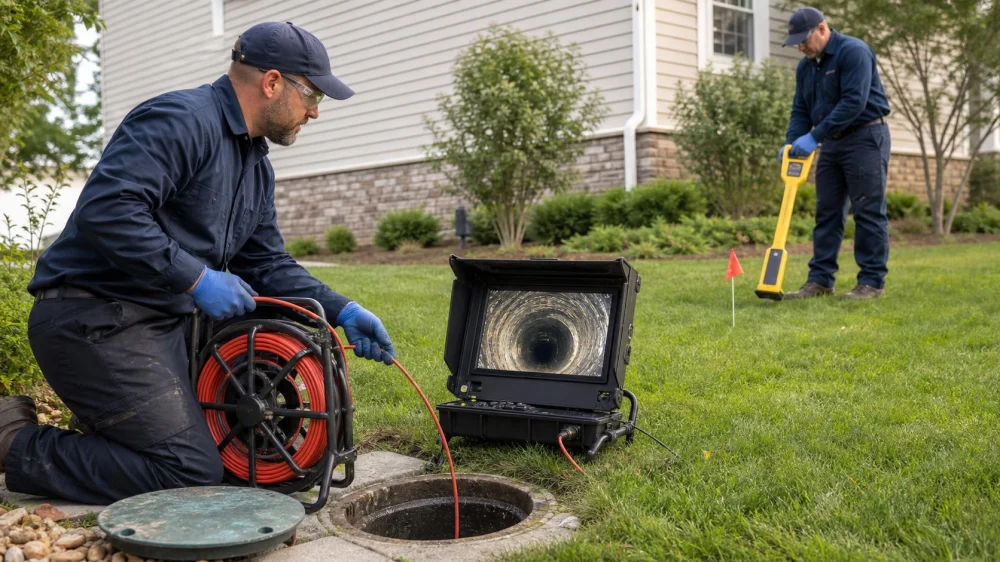
A useful sewer camera inspection connects visible pipe conditions to a measured distance, direction of travel, access point, and surface location. Ask for the complete video, still images, pipe material and diameter, and a written list of findings. A dark image or isolated root does not by itself prove where to excavate; cleaning, locating, or a second access point may be needed.
Phillips & Norgan Plumbing & Heating
4831 E Westgate Dr, Bay City, MI 48706, USA
Define the inspection purpose
State whether the camera is investigating repeated blockages, checking a recently cleared line, evaluating a property purchase, locating a lost connection, or documenting repair. The purpose affects preparation and deliverables. A quick post-clearing pass may not meet the needs of a real-estate condition assessment or excavation plan.
Clarify which pipe is in scope: a branch, building drain, private lateral, septic connection, or municipal side. Ask who owns each segment and whether access permission is required. The camera operator should record the insertion point and direction so a distance reading can be tied to an actual route.
Serafin Plumbing
Jurupa ValleyRiverside CountyCalifornia
7929 Carlyle Dr, Jurupa Valley, CA 92509, USA
Prepare the line and access
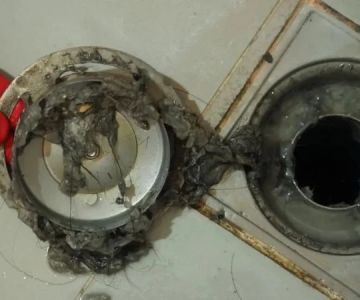
A camera sees only what its lens and pipe conditions permit. Standing dirty water, grease, heavy scale, debris, a complete blockage, or fogged equipment can hide walls and joints. Ask whether the line should be mechanically cleared or cleaned first, what that adds to cost, and whether cleaning could change fragile pipe conditions.
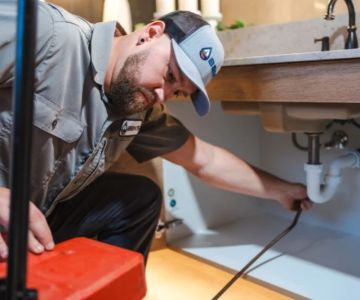
Use a suitable cleanout rather than removing fixtures when possible. Protect floors and landscaping around access. Confirm the camera head fits the pipe and can pass expected bends without force. If the line is actively backing up, control water use before opening a cleanout because retained wastewater may discharge under pressure.
Record useful evidence
The video should begin with a spoken or visual project identifier that does not expose unnecessary personal data, then show the access point, flow direction, and distance counter. Ask the operator to pause at fittings, material transitions, joints, defects, and the public connection when reachable. A slow return pass can reveal features missed on insertion.
Request still images with timestamps or distance markers and a written summary using consistent names. Record pipe material, approximate diameter, visible water level, and whether the lens was centered. Keep the original file rather than only a compressed phone clip. Confirm that you have permission to share it with another contractor or municipality.
Interpret defects carefully
Common observations include roots, deposits, offset joints, cracks, holes, corrosion, deformation, standing water, and changes in material. Appearance alone does not always establish severity. A joint can look displaced because of camera angle, and standing water can reflect a sag, temporary flow, lens position, or downstream restriction.
Ask the operator to distinguish observed fact from interpretation: “roots visible at 42 feet” is evidence; “the entire line must be replaced” is a recommendation that needs scope reasoning. Request the defect length, whether the camera passed it, condition on both sides, and whether cleaning or another camera direction would improve confidence.
Confirm surface location
Distance from the cleanout is measured along the pipe, not as a straight surface radius. Bends and vertical changes affect where the head lies. For excavation, use a compatible electronic sonde and receiver to mark the head from above, then record estimated depth, tolerance, reference points, and marking date.
Camera locating does not replace utility marking, a survey, or safe excavation practice. Contact the applicable utility-marking service and locate private lines separately. Do not assume the sewer follows the shortest path or remains on one property. Easements and public right-of-way rules may affect access and permits.
Connect findings to an estimate
Ask each proposal to cite the video finding, distance, located area, and repair objective. Compare spot repair, lining, bursting, open replacement, continued maintenance, or further diagnosis only when each is technically suitable for the pipe. Access, diameter, bends, collapse, connections, and host-pipe condition can limit trenchless options.
The estimate should separate diagnosis, permits, excavation or access, pipe work, inspections, temporary service, backfill, pavement or landscape restoration, cleanup, and warranty. Ask what would change the price after opening the site. When the recommendation is expensive or evidence is unclear, obtain an independent review using the complete video.
Frequently asked questions
Can a camera see through a clog?
Usually not through a complete opaque blockage. The line may need clearing or access from another direction before the downstream pipe can be assessed.
Does the distance counter show excavation location?
No. It measures cable travel and can have error. Surface locating with a sonde, depth check, reference marks, and utility marking are needed for excavation planning.
Is one root enough to replace the sewer?
Not automatically. Root entry shows an opening or joint issue, but repair choice depends on pipe condition, recurrence, location, access, and whether other defects exist.
Evidence and limitations
This guide reflects common drain inspection and construction documentation practice. Camera imagery has visibility, measurement, and interpretation limits; it does not test every structural property or establish legal ownership. Local plumbing codes, utility rules, permit requirements, and qualified onsite assessment govern repair.
Conclusion and next steps
Define the question, prepare the line, record the full route, and tie every finding to distance and direction. Locate significant defects from the surface before designing excavation. Preserve the original video and compare recommendations against the same evidence so repair scope addresses the documented condition.
 Action Plumbing4.0 (141 reviews)
 Eaton Plumbing & Heating Inc4.0 (2 reviews)
 Newport-Mesa Drains & Plumbing Services5.0 (93 reviews)
 Plum Perfect Plumbing4.0 (23 reviews)
 State-Line Septic and Plumbing LLC.5.0 (57 reviews)
 Hope Plumbing, Heating & Cooling4.0 (5991 reviews)
 Why Your Sink Is Making a Gurgling Noise and How to Fix It
 How to Replace a Splice Coupling That Fails
 How to Detect When Your Plumbing Is Undersized
 How to Choose a Reliable Plumber for Emergency Repairs
 How to Inspect Plumbing After a Flood Event | Essential Steps for Homeowners
 How to Install a New Sink Faucet: A Complete DIY Guide