
Multiple Slow Drains: Map the Pattern Before You Call
On this page
Quick answer
When several drains slow at the same time, stop treating each fixture as an isolated clog. Record which fixtures are affected, their floor and branch, gurgling, odour, backups, and what water use triggers the change. Limit testing if sewage appears. A plumber may need to inspect a shared branch, building drain, sewer lateral, venting, septic system, or municipal condition.
Check urgent warning signs
Stop using affected plumbing and request prompt help if wastewater backs into a tub, shower, floor drain, or lowest fixture. Keep people and pets away from contaminated water. Do not run a washing machine, dishwasher, or large bath to “push it through.” More discharge can turn a slow restriction into an overflow.
Escalate immediately when water is near electrical equipment, outlets, extension cords, appliances, or a flooded basement. Avoid the area and follow emergency electrical guidance. Strong sewer gas, dizziness, breathing symptoms, or a suspected damaged gas or fuel line also warrants leaving the area and contacting the appropriate emergency or utility service.

Elsmore Plumbing LLC
RochesterOlmsted CountyMinnesota
2766 Commerce Dr NW STE D, Rochester, MN 55901, USA
Map fixtures and timing
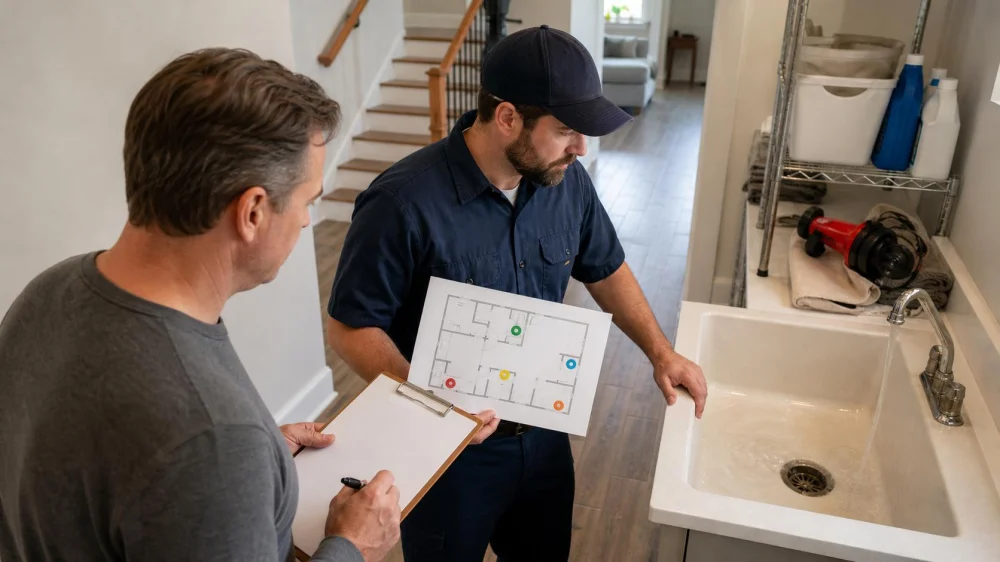
Draw the home by floor and mark each sink, toilet, tub, shower, floor drain, laundry standpipe, and appliance drain. Label each as normal, slow, gurgling, odorous, or backing up. Note the lowest affected fixture and whether symptoms occur only upstairs, only in one bathroom, or across distant parts of the building.
Add a timeline. Did one drain slow for weeks before others changed? Did symptoms begin after heavy rain, freezing weather, construction, landscaping, a large gathering, or a utility notice? Record whether a toilet flush makes a tub gurgle or laundry discharge raises water elsewhere. This relationship can be more useful than the absolute drain speed.
Run limited comparisons
If there is no backup or electrical hazard, use only small, controlled amounts of water to compare fixtures. Watch the lowest drains while another person briefly runs a nearby sink. Stop at the first rise, gurgle, or overflow sign. Do not leave water unattended or repeat a test that already produced evidence.
Check whether neighbours in a shared building or nearby properties have similar symptoms, without opening shared cleanouts. A widespread issue may involve common piping or a public sewer, while a single-home issue may be on private plumbing. Ownership and response responsibility depend on local rules and property documents.
Avoid risky drain clearing
Do not mix chemical drain cleaners, bleach, acids, or other products. Combining chemicals can cause toxic gas, heat, splashing, or pipe damage. Tell the plumber exactly what was used, how much, and when. Keep containers available for label information without bringing contaminated packaging into living areas.
A hand plunger can be appropriate for a simple isolated fixture when used correctly, but multiple slow drains suggest a broader pattern. Avoid powered snakes, pressure bladders, improvised compressed air, and opening a loaded cleanout unless trained and equipped. A cleanout cap under pressure can release sewage suddenly.
Prepare for a plumber
Share the map, timeline, photos, videos, previous service records, sewer repairs, septic maintenance, and chemical use. Locate the main water shutoff and any accessible cleanout without operating them. Clear a safe route to mechanical rooms, crawlspace entries, yard cleanouts, or sewer access while leaving contaminated areas undisturbed.
Ask the plumber how the symptom pattern narrows the likely section, what diagnostic step comes first, and whether the estimate separates clearing, camera inspection, locating, cleaning, repair, and restoration. Confirm licensing and insurance where required, as well as after-hours rates and responsibility for floor or landscaping protection.
Understand possible next steps
The technician may inspect traps and vents, test branch flow, access a cleanout, clear the line, use a camera after flow is restored, or locate a defect from the surface. A camera cannot always see through standing dirty water or a complete blockage. Clearing access may be a diagnostic step, not proof that the underlying defect is solved.
Possible findings include accumulated material, roots, offset joints, a sag, corrosion, collapse, vent obstruction, septic trouble, or a downstream public issue. Request evidence tied to distance and location before approving excavation. Repair choice should consider pipe material, condition, access, code, and whether a spot repair or longer replacement addresses the actual problem.
Frequently asked questions
Does more than one slow drain always mean the main sewer?
No. Several fixtures can share a smaller branch, and venting or septic conditions can mimic drainage restrictions. The fixture map and professional testing locate the affected section.
Should I use chemical cleaner before calling?
Not for a multi-fixture pattern. It may not reach or solve the cause and can create a hazard for occupants and technicians. Report any product already used.
Can heavy rain affect drains?
It can correlate with public sewer surcharge, infiltration, groundwater, or septic saturation in some systems. Record the timing and contact the responsible local service when multiple properties are affected.
Evidence and limitations
This guide reflects common plumbing diagnostic practice: identify the lowest affected fixture, map shared branches, limit discharge during backup, disclose chemicals, and gather evidence before repair. It cannot diagnose pipe location or ownership. Local plumbing codes, utility rules, septic requirements, and an onsite licensed plumber control the response.
Conclusion and next steps
Stop high-volume water use, protect people from sewage and electrical hazards, then map fixtures, triggers, and timing. Give that record to a qualified plumber and ask for stepwise diagnosis. Approve repair only after the affected line and evidence are clear enough to connect the proposed work to the observed problem.

 Action Plumbing4.0 (141 reviews)
 Eaton Plumbing & Heating Inc4.0 (2 reviews)
 Newport-Mesa Drains & Plumbing Services5.0 (93 reviews)
 Plum Perfect Plumbing4.0 (23 reviews)
 State-Line Septic and Plumbing LLC.5.0 (57 reviews)
 Hope Plumbing, Heating & Cooling4.0 (5991 reviews)
 Why Your Sink Is Making a Gurgling Noise and How to Fix It
 How to Replace a Splice Coupling That Fails
 How to Detect When Your Plumbing Is Undersized
 How to Choose a Reliable Plumber for Emergency Repairs
 How to Inspect Plumbing After a Flood Event | Essential Steps for Homeowners
 How to Install a New Sink Faucet: A Complete DIY Guide