
When Multiple Slow Drains May Signal a Main Sewer Problem
On this page
Quick answer
One slow fixture often indicates a local trap or branch-drain issue, but several fixtures slowing, gurgling, or backing up—especially at the lowest level—can point to a blockage or failure in a shared building drain, sewer lateral, municipal system, or septic system. Stop running water if one fixture causes wastewater to rise in another. Avoid repeated flushing and chemical drain cleaners, document the pattern, and contact a licensed plumber or appropriate wastewater authority.
A main sewer or building-drain problem affects the shared piping that carries wastewater from multiple fixtures toward a public sewer or onsite septic system, rather than only the short branch serving one sink, tub, or toilet.

Single drain or system-wide problem?
A single bathroom sink that drains slowly while every other fixture works normally may have a localized obstruction near its stopper, trap, or branch. If the toilet, tub, shower, laundry standpipe, and floor drain react together, the restriction may be farther downstream where their pipes connect.
Location and sequence matter:
- One fixture only: more consistent with a local issue, though not proof.
- Several fixtures in one room: may involve a shared bathroom branch or venting.
- Several rooms or floors: raises concern for a larger shared drain.
- Lowest fixture backs up first: can indicate downstream restriction because wastewater seeks the lowest available opening.
- Neighbors affected: may suggest a municipal, shared-building, or neighborhood issue rather than one home’s lateral.
Only an inspection can locate the fault. Similar symptoms can result from grease, wipes, roots, collapsed pipe, offset joints, scale, poor slope, a full septic tank, saturated drainfield, vent problems, or public sewer conditions.
Jim Monz Plumbing
Cranberry TownshipButler CountyPennsylvania
104 Leatherbark Rd, Cranberry Twp, PA 16066, USA
Warning patterns to notice
- A toilet flush makes the tub or shower gurgle.
- The washing machine discharge causes a floor drain or toilet to rise.
- Water appears in a lower-level fixture when an upstairs fixture runs.
- Multiple drains slow within the same period.
- Sewage odor appears with gurgling or changing trap water levels.
- Wastewater or debris returns through a tub, shower, floor drain, or cleanout.
- Outdoor soil is unusually wet, sunken, or odorous along the sewer route or septic area.
- Symptoms worsen during heavy rain or coincide with a neighborhood overflow alert.
A sewer odor without drainage symptoms may also involve a dry trap, failed seal, venting issue, or another source. Do not use smell alone to diagnose a main blockage.
Safe checks before calling
- Stop adding water temporarily. Pause laundry, dishwashing, showers, and repeated toilet tests.
- List affected fixtures. Record floor level, room, symptom, and the action that triggers it.
- Check neighbors or management. In multi-unit buildings, report the issue promptly and ask whether shared areas are affected.
- Review system type. Determine whether the property uses municipal sewer or onsite septic and gather maintenance records.
- Photograph visible evidence. Document water level and damage without contacting sewage.
- Locate—but do not open—cleanouts. Tell the plumber where accessible caps are located; a pressurized cleanout can release sewage.
Do not remove a toilet, climb onto a roof to inspect a vent, run an untrained power auger, or mix drain products. Chemical cleaners can expose occupants and technicians, damage some piping, and remain trapped behind a blockage.
When to stop using water
Stop household wastewater use when sewage backs up, a low fixture rises as another drains, a septic alarm activates, or continued flow could spread contamination. Keep people and pets away from affected areas.
Raw sewage can contain harmful pathogens. Avoid skin contact and do not use fans that could spread contaminated droplets or dust without a cleanup plan. Call emergency services for electrical danger, structural collapse, or life-threatening exposure. Contact the local health department, wastewater utility, property manager, insurer, or remediation professional as the situation requires.
If the problem follows heavy rain, municipal alerts, or street manhole overflow, notify the sewer authority. If it appears confined to the property, contact a licensed plumber or drain professional. Responsibility for the lateral and cleanup varies by location.
What a professional inspection may include
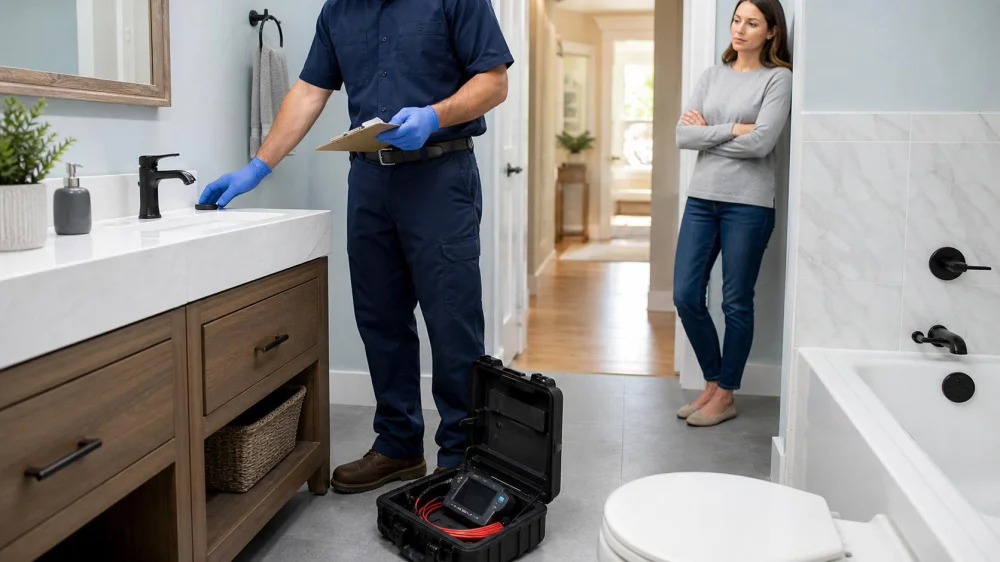
The plumber may verify which fixtures share piping, inspect accessible cleanouts, test flow in a controlled sequence, locate the line, and use an appropriately sized cable, jetting equipment, or camera after conditions allow. A camera image is most useful when the pipe is sufficiently clear to see its walls.
Ask the professional to document:
- where the blockage or defect is located;
- whether the issue is soft material, roots, scale, collapse, offset, belly, or another condition;
- what cleaning or repair solves the immediate problem;
- whether camera findings should be recorded with distance and orientation;
- what preventive follow-up is evidence-based for that pipe;
- which work belongs to the owner, association, landlord, or utility.
A recurring stoppage deserves diagnosis rather than indefinite repeat cleaning. However, a camera cannot always identify pipe slope or structural condition without locating and other measurements.
Special considerations for septic systems
EPA identifies slow fixtures, plumbing backups, gurgling, sewage odors, standing water near the tank or drainfield, and unusually lush spongy grass as possible signs of septic malfunction. Reduce water use and contact a qualified septic provider or local health/regulatory agency.
Do not open or enter a septic tank; gases and lack of oxygen can be fatal. Do not drive over the tank or drainfield, and do not pump a tank during saturated or flooded soil conditions without professional guidance because the tank or system can be damaged.
Sources and evidence notes
The EPA’s current guidance on resolving septic system malfunctions lists slow drains, gurgling, plumbing backups, odors, and wet drainfield conditions as warning signs and advises avoiding sewage contact. EPA information on sanitary sewer overflows explains that blockages, line breaks, system defects, and other failures can cause home backups and public-health threats. A local professional must determine the actual cause and responsibility.
Frequently asked questions
Can a clogged vent make several drains gurgle?
It can contribute to gurgling and trap-water changes, but similar symptoms occur with drain restrictions. Roof work and vent diagnosis involve fall and exposure hazards; use a qualified plumber.
Will plunging one toilet fix a main-line blockage?
A plunger may clear a local toilet obstruction. Stop if other fixtures rise or sewage appears, because additional pressure and water can worsen a downstream backup.
Should I pour chemical drain cleaner into every slow drain?
No. It will not correct collapse, roots, septic failure, or a municipal problem and can create chemical exposure. Tell the plumber about any product already used.
Does a sewer backup mean the city is responsible?
Not automatically. The obstruction may be inside the building, in a privately owned lateral, in shared private piping, or in the public system. Ownership boundaries and backup programs vary locally.
Can tree roots be confirmed without excavation?
A properly performed sewer-camera inspection after restoring visibility may show roots and entry points. Locating and additional testing may be needed before choosing repair.
Next steps
Pause water use, list every affected fixture and trigger, photograph visible evidence, and identify whether the property uses sewer or septic. Call the appropriate licensed professional or utility with that information, request the cause and location in writing, and avoid reopening normal water use until the system can carry flow safely.

 JMS Plumbing5.0 (10 reviews)
 B. Cook & Son Plumbing & Heating Inc4.0 (56 reviews)
 Rooter Man, LLC4.0 (528 reviews)
 Black's Sewer Line Cleaning LLC4.0 (56 reviews)
 Advanced Sewer and Drain Cleaning LLC4.0 (471 reviews)
 Splash Mountain Plumbing Company5.0 (157 reviews)
 How to Install a New Kitchen Sink Faucet: A Beginner’s Guide
 How to Reroute a Plumbing Run Over a Crawlspace: A Step-by-Step Guide
 Plumbing Problems Caused by Tree Roots and How to Solve Them
 Plumbing Maintenance Tips to Avoid Expensive Repairs
 How to Repair a Cracked Pipe Without Replacing It: A Step-by-Step Guide
 Best Plumbing Fixes for Water-Saving Solutions at Home