
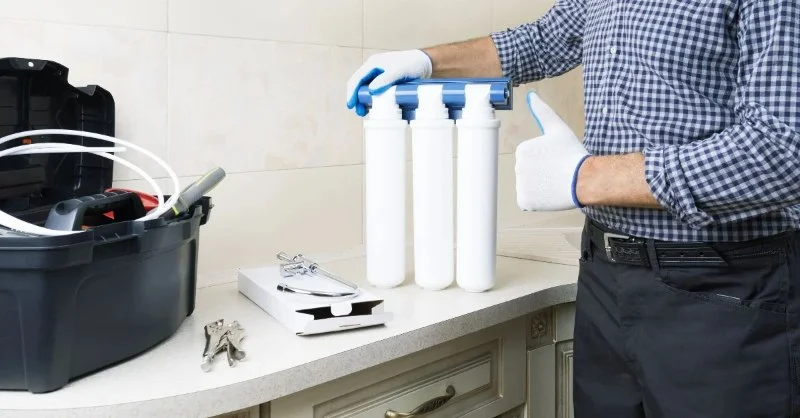
How to Choose the Best Water Filtration System for Your Home
Access to clean, safe drinking water is essential for every home. With so many water filtration systems on the market, it can be overwhelming to choose the best one for your needs. This guide will help you understand the different types of filtration systems and how to select the best option for your home.
- Understanding Your Water Quality
- Types of Water Filtration Systems
- How to Choose the Right System for Your Home
- Installation and Maintenance Tips
- Recommended Brands and Products
1. Understanding Your Water Quality
Before you start shopping for a water filtration system, it’s crucial to understand the quality of your water. The effectiveness of a filtration system depends on the type of contaminants present in your water supply. You can perform a water quality test or refer to your local water utility report to identify common contaminants like chlorine, lead, or sediment.

Cordia Plumbing Inc
Richmond HeightsSt. Louis CountyMissouri
1420 S Big Bend Blvd, Richmond Heights, MO 63117, USA
1.1 Common Water Contaminants
Some of the most common water contaminants include:
- Chlorine: Often used to disinfect water but can affect taste and smell.
- Lead: Found in old plumbing pipes and can be harmful to health, especially in children.
- Hard Water: Contains high levels of calcium and magnesium, leading to scale buildup on pipes and appliances.
- Heavy Metals: Can include mercury, arsenic, and other dangerous elements that may leach into your water.
2. Types of Water Filtration Systems
There are several types of water filtration systems, each designed to remove specific contaminants from your water. Below are the most common filtration methods:
American Plumbing & Leak Detection
CoronaRiverside CountyCalifornia
2175 Sampson Ave STE 109, Corona, CA 92879, USA
2.1 Activated Carbon Filters
Activated carbon filters are the most popular type of water filtration system. They are highly effective at removing chlorine, volatile organic compounds (VOCs), and bad odors. They are available in pitcher filters, under-sink filters, and whole-house systems.
2.2 Reverse Osmosis Systems
Reverse osmosis (RO) systems use a semi-permeable membrane to remove impurities such as heavy metals, fluoride, and dissolved solids. They are highly effective but can be slower and waste more water than other systems.
2.3 UV Purification Systems
Ultraviolet (UV) purification systems use UV light to kill bacteria, viruses, and other microorganisms. These systems are ideal for people with concerns about biological contaminants in their water.
2.4 Whole-House Filtration Systems
If you want to ensure clean water throughout your home, a whole-house filtration system is a great option. These systems treat water at the point of entry, providing purified water for all uses, including drinking, cooking, and bathing.
3. How to Choose the Right System for Your Home
Choosing the best filtration system depends on a few key factors: the type of contaminants in your water, your budget, and your home’s water usage. Follow these steps to determine the best system for your needs:
3.1 Test Your Water
Start by testing your water to identify the contaminants present. You can purchase a water testing kit or contact a local lab to perform a professional analysis.
3.2 Consider Your Budget
Water filtration systems vary in price, from affordable pitcher filters to expensive whole-house systems. Consider the upfront cost as well as ongoing maintenance expenses when choosing a system.
3.3 Assess Your Water Usage
If you have a large family or use a lot of water, you may want to opt for a high-capacity filtration system. Conversely, smaller households may be able to make do with a point-of-use filter, such as a faucet-mounted or pitcher filter.
3.4 Filter Longevity
Different systems require different maintenance schedules. Some filters need to be replaced every few months, while others may last for a year or more. Be sure to factor in the cost and time commitment for replacing filters or servicing your system.
4. Installation and Maintenance Tips
Proper installation and regular maintenance are essential for ensuring the longevity and effectiveness of your water filtration system. Here are a few tips:
4.1 DIY vs. Professional Installation
Many under-sink and faucet-mounted filters can be installed by homeowners with basic plumbing knowledge. However, whole-house systems and reverse osmosis units often require professional installation to ensure proper setup.
4.2 Regular Maintenance
Be sure to replace filters on schedule and clean your system as needed to maintain optimal performance. Neglecting maintenance can lead to reduced filtration efficiency and poor water quality.
5. Recommended Brands and Products
Choosing a reputable brand can ensure that you’re getting a high-quality filtration system that delivers effective results. Some trusted brands in the water filtration industry include:
- Brita: Known for its affordable pitcher filters and faucet-mounted options.
- APEC: A leading brand for reverse osmosis systems, offering high-performance filters for home use.
- Aquasana: Offers whole-house filtration systems that provide comprehensive water purification.
- Berkey: Known for its gravity-fed filtration systems that are ideal for emergency preparedness and outdoor use.
For more information on water filtration products, visit Plumbers Supply Hub, where you can find a wide selection of filters and expert advice on choosing the best system for your home.


 Imaginaire5.0 (16 reviews)
 Plumbing Plus Co4.0 (27 reviews)
 Dailys Drain Service5.0 (4 reviews)
 Burnett Septic & Drain5.0 (5 reviews)
 Killeen Plumbing Company4.0 (426 reviews)
 Mr. Plumber by Metzler & Hallam4.0 (943 reviews)
 How to Repair a Pipe Saddle That Leaks
 How to Clean and Maintain Your Shower Head for Better Flow
 How to Clean and Maintain Your Plumbing Pipes for Better Performance
 How to Troubleshoot a Noisy Toilet: Common Causes and Solutions
 How to Inspect Plumbing Connections in an Addition: A Step-by-Step Guide
 How to Protect Pipes from Freezing in Cold Climates