
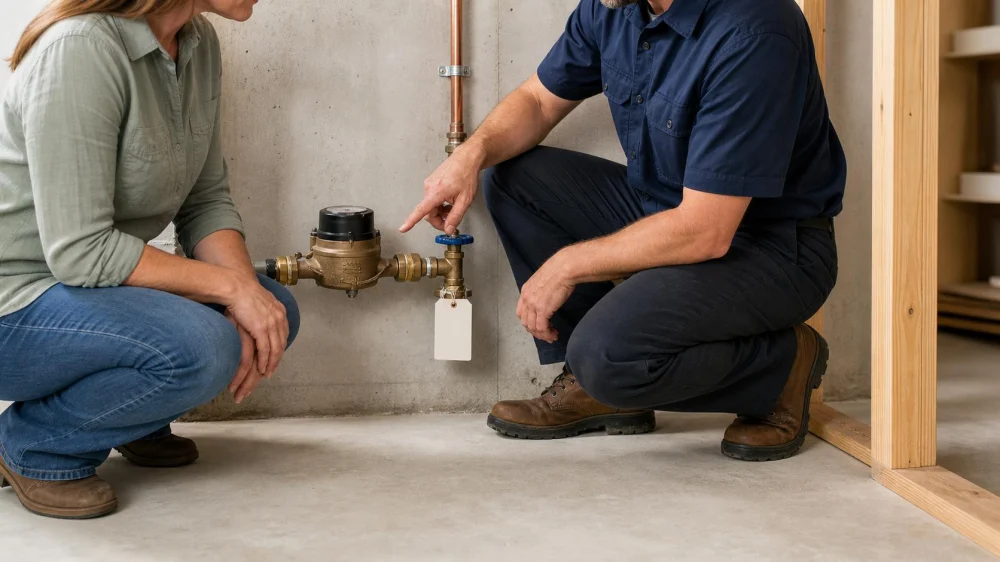
How to Find and Check Your Home’s Main Water Shutoff
On this page
Quick answer
Find the main water shutoff by tracing the cold-water service line where it enters the building, often near the water meter, foundation wall, basement, crawl-space entry, garage, utility room, or an exterior service point in warm climates. Confirm the valve with the utility or a licensed plumber before an emergency. Keep the route clear and label it. Do not force, dismantle, or operate a corroded, leaking, buried, utility-owned, or unfamiliar valve.
A main water shutoff valve is the building-side control intended to stop most incoming potable water to the home; it may not control a private well, fire-sprinkler system, irrigation branch, or water already stored in a heater or tank.

What the main shutoff controls
Closing the correct valve can limit damage from a burst supply pipe, failed fixture connector, or major indoor leak. It does not repair the fault, remove pressure instantly from every pipe, or make electrical and structural hazards safe.
A property may have several important controls:
- fixture stops beneath sinks or behind toilets;
- appliance valves for a washer, dishwasher, refrigerator, or water heater;
- a building main on the customer side of the meter;
- a curb stop, meter-box valve, or other utility control;
- private-well pump controls and pressure-tank plumbing;
- separate irrigation or fire-sprinkler valves.
Do not assume the nearest valve controls the whole home. Fire-protection equipment must remain available and may be governed by special rules.
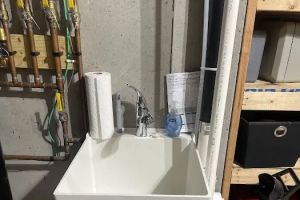
Where to look for the valve
- Find the meter or service entry. Review the water bill, inspection report, house plans, or utility information if available.
- Trace the incoming cold-water pipe. Indoors, look along the foundation-facing wall in a basement, crawl space, garage, mechanical room, or utility closet.
- Check exterior service locations. In some climates the meter and controls are in a ground box near the street or property edge. Do not reach into a box containing insects, standing water, damaged covers, or unfamiliar equipment.
- For a private well, identify the system. The pump, pressure tank, electrical disconnect, and plumbing valves require well-specific instructions from a qualified professional.
- Ask the authority. The local water utility or licensed plumber can distinguish customer-operable and utility-owned valves.
Valve location varies by age, climate, construction, renovations, and local practice. Country-level advice cannot identify one universal location.
How to identify it safely
Common building-side valves include a lever-style ball valve and a round-handled gate valve, but appearance alone is not proof. A lever is often open when aligned with the pipe and closed when perpendicular, yet damaged, nonstandard, or specialized valves require confirmation. Round handles typically close by turning clockwise, but a stuck stem can break if forced.
Look for:
- a valve on the incoming service pipe before branches spread through the house;
- a water meter nearby, where meters are inside;
- adequate working space and a dry, supported pipe;
- labels or records from the utility, builder, inspector, or plumber.
Do not confuse water, gas, hydronic heating, fire-sprinkler, and fuel-system valves. If the pipe or control is not positively identified, stop and obtain professional help.
A safe readiness check
- Photograph the valve and route, then confirm ownership and operation with the utility or plumber.
- Inspect visually for corrosion, mineral deposits, moisture, damaged handles, poor pipe support, or blocked access.
- Remove stored items from the approach without touching questionable piping.
- Label the confirmed valve and show every responsible household member.
- Ask a plumber whether the valve should be function-tested and how; older gate valves may fail when disturbed.
- Keep appropriate contact numbers and any approved valve tool accessible—not locked beside the valve.
A readiness check is primarily identification and inspection. It is not ideal to close an old valve casually before travel or a holiday if reopening failure would leave the home without water. Schedule testing when repair help is available.
What to do during a leak
- Keep people away from ceilings, floors, or walls that are bulging, collapsing, or electrically energized.
- Call emergency services for fire, shock, structural collapse, or another immediate threat.
- If safe and already identified, close the appropriate fixture valve or main shutoff without excessive force.
- Avoid standing water near electrical equipment; have the power handled by a qualified person when conditions are unsafe.
- Call a licensed plumber and notify the utility or property manager when appropriate.
- Document damage and begin water removal only when the area is safe.
The American Red Cross advises turning off water at the main valve when pipes are damaged and calling a plumber. If sewage lines may be damaged, avoid using sinks, showers, and toilets until evaluated.
When to call a plumber or utility
Call before operating the valve when it is corroded, leaking, buried, inaccessible, unsupported, frozen, painted shut, or connected to unidentified systems. Professional replacement is appropriate when the valve does not fully stop flow, the handle spins, the stem leaks, or there is no reliable customer-side shutoff.
The utility may need to operate the street or meter-side control so a plumber can replace the building valve. Rules about who may open a meter box or use a curb key vary locally. Do not operate utility equipment without authorization.
Sources and evidence notes
Ready.gov encourages households to learn how to shut off utilities, including water. The American Red Cross guidance on checking home utilities after a disaster says to close the main valve when water pipes are damaged and call a plumber. These sources support preparedness; the local water provider, building records, equipment instructions, and licensed plumber determine the correct valve and procedure for a specific home.
Frequently asked questions
Can I turn the main valve off to test it?
Only after confirming the valve and assessing its condition. An old valve may leak or fail to reopen. Ask a plumber to test or replace questionable equipment when help is available.
Why does water still run after the main is closed?
Water may remain in pipes or storage tanks, a valve may not close fully, or another supply may exist. Open a safe faucet only under appropriate instructions and have the system evaluated if flow continues.
Is the valve in the meter box mine to operate?
Not necessarily. Ownership and authorization vary by utility and location. Contact the water provider before using a meter key or touching a curb stop.
Should I shut off water before a vacation?
That decision depends on the plumbing, heating, fire protection, irrigation, appliances, climate, insurer, and valve reliability. Ask a plumber about a vacation plan rather than closing an untested valve.
What if my home uses a private well?
Well systems combine plumbing and electrical controls. Obtain instructions for the pump, pressure tank, treatment equipment, and valves from a qualified well or plumbing professional; do not assume municipal-water steps apply.
Next steps
Locate the service entry, photograph the suspected valve, and confirm it with your water utility or a licensed plumber. Clear the approach, label the verified control, show household members, and schedule repair or testing if the valve is corroded, stiff, leaking, or unreliable—before an emergency occurs.
 Mason Plumbing & Drain4.0 (88 reviews)
 Discount Drain & Sewer Cleaning3.0 (12 reviews)
 Scott's Plumbing Company4.0 (175 reviews)
 Downing Plumbing4.0 (176 reviews)
 SteelPoint Plumbing4.0 (72 reviews)
 ROEDER PLUMBING3.0 (9 reviews)
 Plumbing Fixes for Common Kitchen Problems
 How to Clean Out a Septic Drain Field Safely
 The Essential Guide to Drainage and Plumbing Systems for New Homeowners
 The Importance of Choosing a Qualified Plumber for Your Home’s Needs
 The Importance of Regular Drain Maintenance for Your Home’s Plumbing System
 How to Handle a Plumbing Leak: A Homeowner’s Emergency Guide