
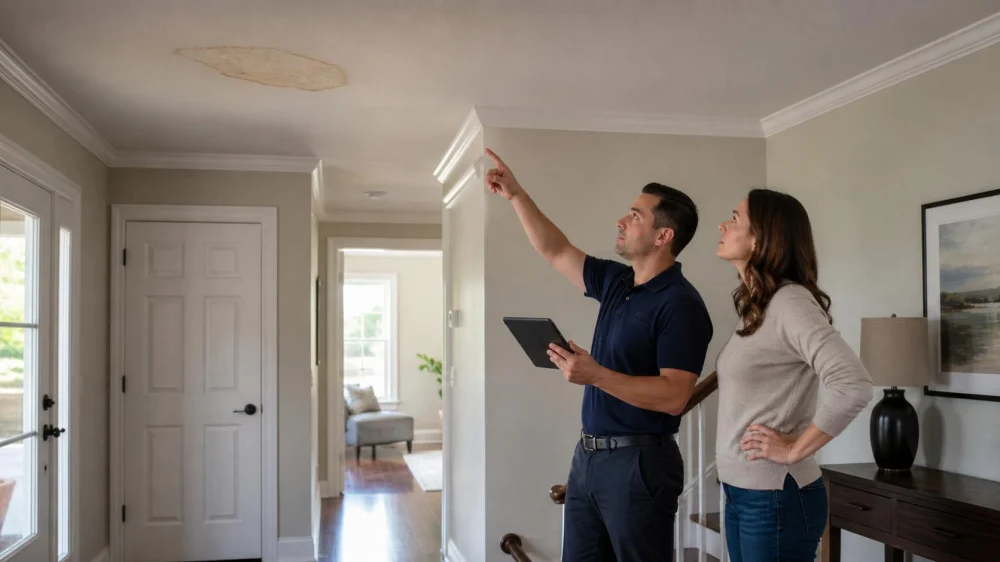
Ceiling Stain Below a Bathroom: Stop Use and Trace Clues
On this page
Quick answer
Treat a new, spreading, dripping, soft, or bulging ceiling stain as active until assessed. Keep people away, stop using the bathroom fixtures most likely to trigger it, and avoid touching wet electrical devices or opening the ceiling. Photograph the pattern, note which fixture was used and when the stain changed, then call a plumber; use emergency help for electrical danger, collapse risk, or uncontrolled water.

Shane Elmore Plumbing
Bowling GreenWarren CountyKentucky
772 Interstate Dr, Bowling Green, KY 42101, USA
Why the stain location does not identify the leaking part
Water can travel along framing, pipes, fasteners, insulation, and the back of finishes before appearing below. The trigger may involve a supply connection, drain, overflow, seal, fixture, waterproofing, condensation, or a source outside the bathroom. Color and shape can show change over time, but they cannot safely prove the origin without controlled testing and access.
This guide is for United States occupants who notice a ceiling stain beneath or near a bathroom. It covers safe observation and service preparation, not ceiling demolition, electrical work, mold assessment, waterproofing design, insurance coverage, or a remote diagnosis. Renters should follow lease and emergency reporting procedures.

Roto-Rooter Plumbing & Drain Service
ChampaignChampaign CountyIllinois
1304 Anthony Dr, Champaign, IL 61821, USA
Practical checklist
- Active dripping, spreading edges, sagging, softness, cracking, falling material, wet light fixtures, buzzing, burning odor, or breaker changes.
- Bathroom layout above, recent shower, tub, toilet, sink, bidet, laundry, cleaning, overflow, drain backup, caulking, or renovation work.
- Whether the mark changes during fixture use, shortly afterward, during rain, with HVAC operation, or when no water is being used.
- Visible dry-area clues around supply valves, toilet base, tank, sink cabinet, tub edge, shower enclosure, grout, access panels, and adjacent rooms.
- Main and local shutoff locations, whether they operate without force, building emergency contact, landlord, plumber, electrician, and insurer details.
- Photos with date and scale, stain outline, drip container if safely placed, fixture-use log, water-meter observations, and prior repair records.
- Children, pets, furniture, electronics, flooring, and access routes that need protection without standing below a damaged ceiling.
Step-by-step plan
- Keep people and pets out from beneath a wet, soft, cracked, or bulging area and do not touch wet lights, fans, switches, outlets, or metal fixtures.
- Stop using the suspected bathroom fixtures. If water is uncontrolled and a known shutoff can be reached safely, close it without forcing a stuck valve.
- From a dry, safe location, photograph the stain and mark its visible edge only if the surface is stable and can be approached without electrical risk.
- Write down the last fixture use, when the mark appeared, whether it grew or dripped, weather and HVAC conditions, and any prior plumbing or tile work.
- Look only at accessible dry areas for obvious water around valves, cabinets, fixture bases, and access panels; do not remove finishes or recreate the leak repeatedly.
- Contact a licensed plumber or building maintenance and share the layout, trigger log, photos, shutoff status, and any electrical or structural concerns.
- After the source is controlled, arrange appropriate drying, finish evaluation, electrical review, and moisture or mold assessment when conditions warrant.
Record the first sighting, stain dimensions and photos, active drips, ceiling condition, fixture-use timeline, weather, water-meter clues, shutoffs used, contacts notified, plumber findings, tests performed, repairs, drying readings, finish work, invoices, and any recurrence. Preserve damaged items and follow insurer or landlord documentation instructions.
Limits and important notes
Do not puncture a bulging ceiling, cut drywall, drill test holes, remove a light, run a fixture repeatedly, stand on wet flooring, or use a household moisture meter as proof of the source. Do not force corroded valves or assume that stopping visible dripping means concealed materials are dry.
Call emergency services or the utility when water contacts energized equipment, there is arcing, smoke, burning odor, shock risk, or another immediate hazard. Leave the area for significant ceiling movement or falling material. Use emergency plumbing or building response for uncontrolled flow, and qualified drying or environmental help for extensive wet materials or suspected contamination.
Frequently asked questions
Does a stain directly below the toilet mean the toilet seal failed?
Not necessarily. Water can travel, and several fixtures or building systems may share the area. A controlled professional diagnosis is needed.
Should I poke a hole to drain a ceiling bubble?
No. Keep away from the area and contact qualified help because hidden electrical hazards and ceiling collapse can make puncturing dangerous.
Can I keep using the sink if the shower seems responsible?
Avoid suspected fixtures until the layout and source are assessed; drains and supplies may share concealed routes, and repeated testing can worsen damage.
Will the stain dry after the plumbing repair?
Drying depends on materials, water volume, ventilation, and access. Confirm moisture and finish conditions instead of judging only by surface color.
Who should inspect a wet light fixture?
A qualified electrician should assess electrical equipment affected by water, coordinated with the plumber or building response as needed.
Sources and evidence
Use the building's emergency plan, current lease or property procedures, local licensed plumbing and electrical requirements, manufacturer instructions for affected fixtures, and insurer guidance. On-site findings from qualified trades override a generic symptom guide.
Conclusion and next steps
Restrict the area, stop suspected fixture use, avoid wet electrical equipment and damaged ceiling material, and record the stain and trigger timeline. Contact the plumber or building emergency service with those details. After source control, verify drying and arrange the appropriate electrical, finish, structural, or environmental follow-up.



 Jason Napier Plumbing Ltd4.0 (33 reviews)
 Valley Plumbing & Heating4.0 (8 reviews)
 Pro Plumbers Inc Long Beach, CA4.0 (144 reviews)
 A & J Plumbing & Water Heater Repair LLC0.0 (0 reviews)
 Ali's Plumbing0.0 (0 reviews)
 Pine Creek Plumbing4.0 (344 reviews)
 How to Install a New Pipe System for Your Home
 How to Test Your Plumbing for Hidden Leaks and Save Money
 How to Prevent Settling Damage to Plumbing Joints
 How to Repair a Toilet That Runs Intermittently: Step-by-Step Guide
 How to Route Plumbing for an Outdoor Grill Station
 How to Repair a Junction That Is Leaking Under Slab