
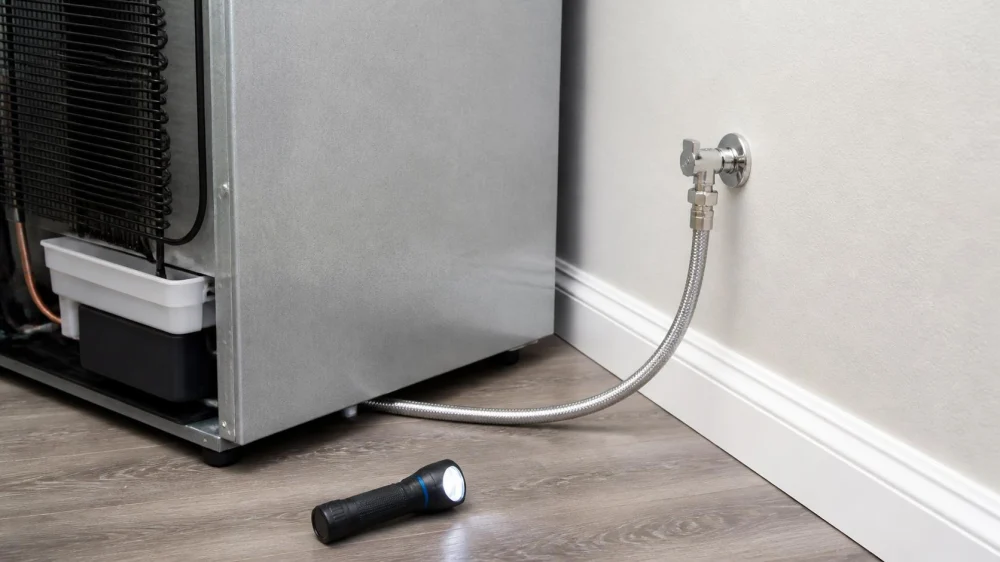
Refrigerator Water Supply Line: Check the Route, Valve, and Leak Signs
On this page
Quick answer
A refrigerator with an ice maker or water dispenser usually has a small supply line running from a cold-water connection and shutoff valve to the appliance. Identify the valve before a leak, inspect the visible line and connections for moisture, corrosion, kinks, abrasion, or stress, and keep the route clear. If water appears near electrical parts or outlets, do not stand in the wet area or handle energized equipment—keep people away and get qualified help.
Do not pull the refrigerator forward until you know the line has enough slack and the appliance can be moved safely.
Map the water route first
The shutoff may be in a nearby cabinet, basement, wall box, crawlspace, or behind the appliance. Trace only what is safely visible. Label the household side of the valve without blocking access, and record the refrigerator model and manufacturer instructions.
- Find the appliance connection and household connection.
- Identify the refrigerator shutoff and main water shutoff.
- Note the line material and approximate age if known.
- Photograph the route before cabinets or walls close.
- Do not operate a utility-owned valve or meter.
Inspect without disconnecting
Use a flashlight and look for droplets, mineral deposits, discoloration, swollen cabinet material, soft flooring, mold-like growth, corrosion, rubbing, flattening, tight bends, or a line stretched between connections. Listen for unexpected water flow when the dispenser and ice maker are idle.
Do not loosen a fitting to “check” it while the line is pressurized. A dry paper towel placed beneath an accessible connection can reveal new moisture without disturbing it.

Andersen Plumbing & Sewer
Arlington HeightsCook CountyIllinois
576 S Arthur Ave, Arlington Heights, IL 60005, USA
Protect the line when moving the appliance
Refrigerators are heavy, can tip, and may damage flooring. The line can pull loose if it is short, tangled, frozen in place, or caught under a wheel. Review the appliance manual and use appropriate assistance.
- Clear the path and protect the floor.
- Confirm the shutoff location before movement.
- Check for visible slack without tugging.
- Move slowly with a second person or qualified technician.
- Watch the line continuously and stop if it tightens.
Respond to a suspected leak
Stop using the dispenser and ice maker. If it is safe and you know the correct appliance shutoff works, close it according to its design. For a large or uncontrolled leak, use the verified main shutoff or contact the water utility or emergency plumbing service as appropriate.
Avoid electrical hazards, protect occupants, and document the water path. Remove standing water only when the area is safe. Contact the appropriate plumber, appliance technician, insurer, landlord, or property manager.
Prepare for repair or replacement
Provide the technician with the appliance model, line material, valve location, leak location, installation age, photographs, and whether cabinetry limits access. Ask which part failed, whether the valve operates reliably, and whether the replacement complies with the appliance manufacturer and local plumbing requirements.
After service, observe all accessible connections while the water and ice functions operate and again after the refrigerator returns to position.
Build a prevention routine
Check the floor edge, nearby cabinet, valve, and visible tubing periodically and after the refrigerator is moved. Keep cleaning supplies from pushing against the line. Consider a leak sensor or whole-home flow monitor based on the home's risk, access, and budget, and test installed devices according to their instructions.
Address small leaks promptly rather than waiting for visible floor damage.
Important limitations
This is general U.S. inspection guidance, not plumbing, electrical, appliance-repair, mold-remediation, or insurance advice. Line types, valves, installations, codes, and appliance instructions vary. Use qualified professionals where access, electricity, pressure, damage, or code compliance creates risk.
Evidence notes
EPA WaterSense guidance recommends regular leak checks and prompt repair, while utility guidance includes refrigerators among water-using devices that can leak. The checklist focuses on early observation, known shutoffs, safe access, manufacturer instructions, and post-service verification.
FAQ
Where is the refrigerator shutoff valve?
It may be nearby or below the kitchen; trace only visible piping and ask a plumber if it is unclear.
Can I pull the refrigerator out by myself?
Heavy appliances can tip or damage the line and floor. Follow the manual and use appropriate help.
Should I tighten a damp fitting?
Do not improvise on a pressurized connection. Isolate water safely and use qualified service.
What does white buildup mean?
Mineral residue can mark past or current seepage; document it and check for fresh moisture.
Would a leak sensor help?
It can provide an alert, but placement, testing, and response planning determine its value.
Next steps
Locate and document both shutoffs, inspect the visible route without disturbing fittings, clear objects that press on the line, and record any moisture or damage. Arrange qualified service for uncertain valves, inaccessible lines, or active leaks.

 Richards Rooter and Plumbing5.0 (107 reviews)
 Rick Adams Plumbing & Pools3.0 (45 reviews)
 Prieto plumbing5.0 (44 reviews)
 Jacobs Plumbing & Pump Service, LLC0.0 (0 reviews)
 Hal's Plumbing4.0 (23 reviews)
 A1 Rooter Service, LLC5.0 (72 reviews)
 How to Detect Plumbing Leaks Early to Avoid Expensive Repairs
 How to Maintain Your Plumbing System to Avoid Costly Repairs
 Toilet Runs Intermittently? Check the Flapper, Chain, and Fill Level
 What Causes High Water Bills and How to Fix It
 What Causes Plumbing Pipes to Freeze and How to Prevent It
 How to Replace a Float Valve in a Rain Barrel System