
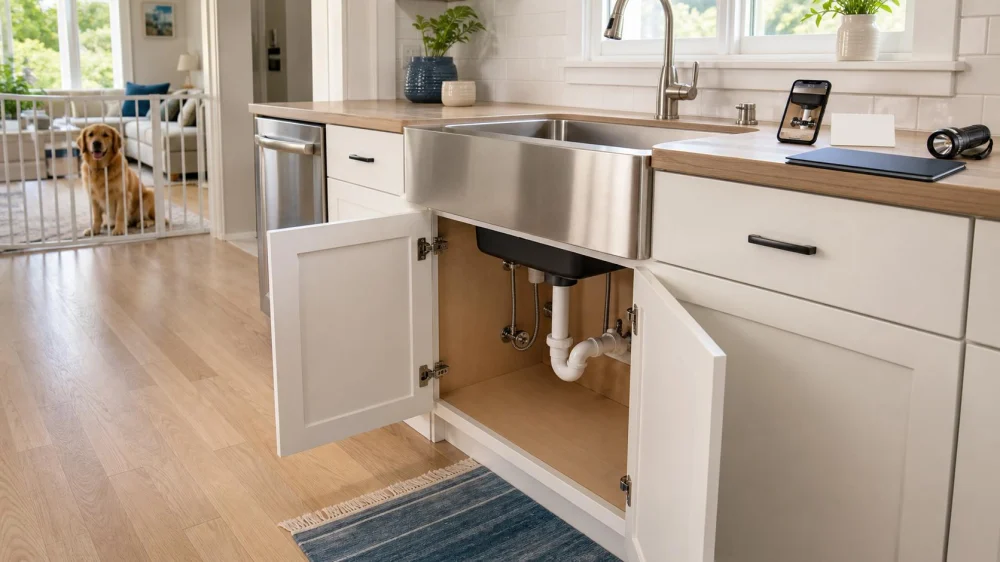
Before a Plumber Arrives: Clear Access and Record Symptoms
On this page
Quick answer
Before a plumber arrives, protect people from the hazard, clear a direct path to the affected fixture and relevant utility areas, contain pets, and write a short symptom timeline. Keep photos, model information, recent repair details, and the water-shutoff location ready. Do not force valves, dismantle equipment, open walls, or clean away evidence of an active leak unless immediate safety requires it.
This checklist is for a scheduled residential plumbing visit in the United States. Emergency dispatchers and local professionals may give different instructions based on flooding, sewage, gas, electrical exposure, freezing, or building type.
Make the area safe first
Preparation begins with the hazard, not with cleaning the room.
- Keep children, pets, and visitors away from water, sewage, unstable ceilings, broken fixtures, and open access panels.
- If water is near outlets, appliances, a panel, wiring, or powered equipment, do not enter or touch the wet area. Contact emergency or qualified electrical help as appropriate.
- Follow dispatcher instructions about shutting off a fixture, appliance, branch, or main supply. Do not force a corroded or stuck valve.
- Stop using a fixture that causes overflow, sewage backup, rapid leaking, or water around the toilet base.
- Ventilate only when it can be done without spreading contamination or entering an unsafe space.
- Use buckets or towels for minor clean water only when safe, and photograph the original pattern first.
Call emergency services for immediate threats to life or structural safety. A routine appointment is not the right response to uncontrolled flooding, suspected gas, electrical danger, or a collapsing ceiling.
Hovey Rooter Service & Plumbing
RiversideRiverside CountyCalifornia
6956 Indiana Ave # 4, Riverside, CA 92506, USA
Clear useful access
The plumber may need more than the visible fixture. Ask the company what areas should be accessible.
- Open the route. Move shoes, boxes, rugs, toys, and fragile objects from the entrance to the work area.
- Empty the cabinet. Remove cleaners, bins, and stored items from under the affected sink without disturbing wet or damaged materials.
- Provide utility access. Clear the main water shutoff, water heater, meter area, cleanout, crawlspace entrance, or mechanical room only when relevant and safe.
- Contain pets. Use a closed room, crate, or secure gate away from the route. Tools, open doors, and unfamiliar people can create escape and injury risks.
- Protect valuables. Remove personal papers, medicines, electronics, jewelry, and breakable decor from nearby surfaces.
- Arrange parking and entry. Explain building access, elevators, loading rules, gate codes, permits, or parking restrictions before arrival.
Do not remove permanently installed panels, cut drywall, dig, lift heavy appliances, or enter a crawlspace unless the plumbing company specifically directs it and you can do so safely.
Record symptoms without changing them
A useful symptom record answers when, where, and under what conditions the problem occurs.
- Write the first date and approximate time you noticed the issue.
- Describe what activates it: flushing, draining a sink, running hot water, using an appliance, rain, or no obvious trigger.
- Note whether the symptom is constant, intermittent, spreading, louder, slower, or worse than before.
- List every affected fixture and which fixtures still work normally.
- Take wide and close photos or short videos, using a reference object only when it can be placed safely.
- Record odor, color, sound, temperature, and visible residue without touching or tasting water.
- List recent repairs, remodels, utility shutdowns, freezes, storms, appliance installations, or drain products.
Do not repeatedly recreate an overflow or leak for a video. One safe observation is enough. Preserve failed parts, receipts, and packaging if they are already removed, but do not disassemble the system to create evidence.
Prepare property and service details
Have these details available at check-in:
- Property address, unit, building contact, and the adult authorized to approve work.
- Home age, relevant remodel date, and whether the water supply is municipal or a private well.
- Fixture, appliance, pump, filter, or water-heater brand and model when visible.
- Warranty documents, prior invoices, inspection reports, and earlier diagnosis related to the same problem.
- Main shutoff location and whether anyone has tested it recently—without testing it just before the visit.
- Access limits, known hazardous materials, shared plumbing, tenant-landlord responsibilities, or association rules.
- Questions about dispatch fees, estimates, diagnostic charges, payment, permits, and how additional work is authorized.
Ask the plumber to explain findings, options, exclusions, and the next step before authorizing work. The person approving the repair should be reachable during the visit.
Limits and urgent situations
Do not hide active damage: Avoid painting, caulking, closing the wall, or replacing wet materials before the source is assessed. Temporary safety containment is different from cosmetic repair.
Do not mix chemicals: Tell the plumber about every drain cleaner, bleach product, descaler, or other chemical recently used. Keep containers or photos of labels available and do not add another product.
Respect contamination: Sewage and unknown water require protective procedures. Keep people out and follow professional cleanup guidance.
Escalate changes: Call the company again if the leak grows, a new fixture is affected, power becomes involved, water service stops, or the situation becomes unsafe before arrival.
Evidence and practical notes
This checklist reflects general service preparation: control immediate hazards, avoid changing the failure condition, provide safe access, document the timeline, and make an authorized decision-maker available.
The correct shutoff and cleanup actions depend on the water source, fixture, building, electrical exposure, and contamination. Instructions from the dispatcher, water utility, building management, insurer, and licensed professionals take priority over a general checklist.
Frequently asked questions
Should I clean under the sink before the plumber arrives?
Remove dry stored items and valuables if it is safe. Do not touch sewage, electrical hazards, sharp debris, mold-like growth, or swollen materials. Photograph moisture patterns before moving towels or containers.
Should I shut off the main water?
Follow the plumbing company’s instructions. A fixture valve may be enough in some cases; a main shutoff may be appropriate in others. Do not force a valve or enter an unsafe area to reach it.
Can I keep using the other fixtures?
Ask the dispatcher. Shared drains or supply lines can make another fixture worsen the problem. Stop use if activity causes backing up, leaking, noise, or spreading water.
Why does the plumber need access beyond the broken fixture?
The supply, drain, vent, cleanout, shutoff, water heater, or connected appliance may be elsewhere. Ask which areas are likely to matter so you clear only relevant access.
What photos are most useful?
Take one wide image showing location, one close image of the symptom, and the model label when safely visible. A short video can capture intermittent sound or flow. Do not recreate a hazardous failure.
Conclusion and next steps
Make the area safe, clear the route, contain pets, and prepare a concise symptom timeline with photos and recent work. Keep model, warranty, shutoff, access, and authorization details ready. Good preparation does not mean dismantling the system; it gives the plumber safe access and reliable evidence without adding damage or delay.

 Ohio Plumbing LTD (Lic#14254)2.0 (5 reviews)
 Hawkins Plumbing0.0 (0 reviews)
 Easy Call Plumbing5.0 (1 reviews)
 Primewest Plumbing5.0 (107 reviews)
 Parzival Plumbing4.0 (990 reviews)
 Next pipe Plumbing5.0 (16 reviews)
 How to Fix Low Water Pressure in Your Shower: Easy Home Solutions
 How to Test a Backwater Valve in Your Sewer Line: A Step-by-Step Guide
 Why Your Garbage Disposal Is Jamming and How to Fix It
 The Importance of Regular Drain Maintenance for Your Home’s Plumbing System
 How to Maintain Your Home’s Plumbing System to Avoid Unnecessary Costs
 The Importance of Choosing a Qualified Plumber for Your Home’s Needs