
Why an Unused Drain Smells and How to Check the Trap
In this guide
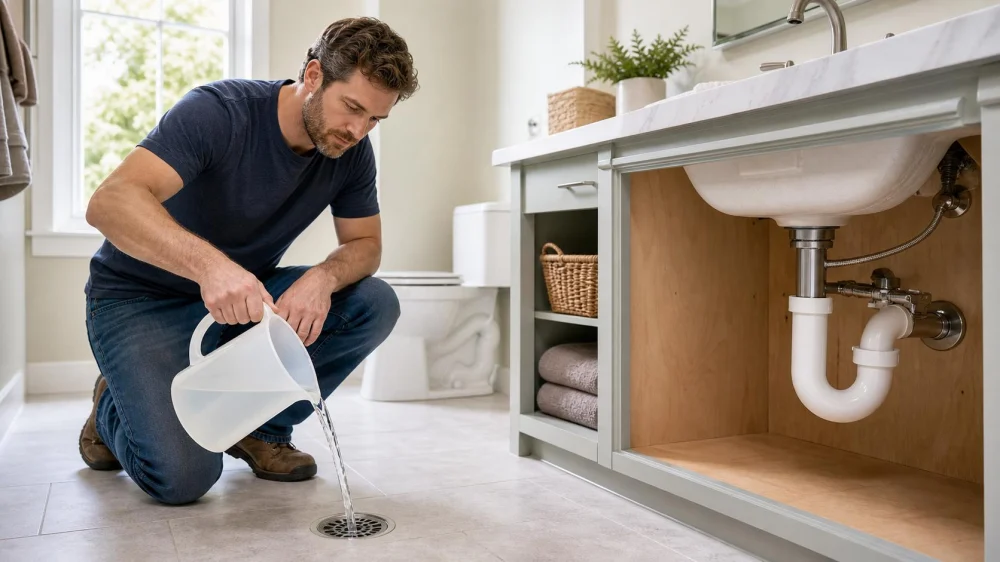
A musty or sewer-like odor from a guest shower, basement floor drain, utility sink, or other rarely used fixture often has a simple explanation: the water inside its trap has evaporated. The curved trap is designed to retain a liquid seal between the room and the drainage system. When that seal disappears, gases and odors can move through the open path. Refilling the trap is a reasonable first check, but an odor that returns quickly or affects several fixtures needs a broader plumbing evaluation.

Quick answer
If a rarely used drain smells, look for visible leaks or damage, ventilate the room, and slowly run or pour clean water into the drain to restore the trap seal. Then observe whether the odor fades and whether the water remains. Do not mix drain chemicals, bleach, ammonia, or other cleaners. If the smell persists, returns quickly, appears with gurgling or changing water levels, or involves multiple drains, contact a licensed plumber. A broken trap, failed seal, venting problem, blockage, or hidden leak may be responsible instead of ordinary evaporation.
Bolton Plumbing & Construction LLC
TazewellClaiborne CountyTennessee
225 Metcalf Ln, Tazewell, TN 37879, USA
How a drain trap blocks odor
A P-trap or other approved fixture trap contains a bend that holds water after the fixture drains. That standing water forms a physical barrier between indoor air and the sanitary drainage piping. International Plumbing Code provisions require liquid-seal traps for fixtures in most ordinary situations and specify protection where trap seals are subject to evaporation.
The trap does not “filter” sewer gas or neutralize odor. It blocks the air path as long as enough liquid remains. A correctly vented drainage system also limits pressure differences that could pull or push water out of the trap. The trap, vent, fixture connection, and drain piping function together.
Sink traps are often visible in the cabinet, but shower, tub, and floor-drain traps sit below the floor. Toilets contain an integral trapway visible as water in the bowl. Different fixtures therefore require different inspection and repair methods.
Why an unused trap dries out
Every exposed water surface gradually evaporates. A frequently used sink or shower replaces its trap water during normal drainage, so loss goes unnoticed. A guest bathroom, seasonal property, basement floor drain, mechanical-room drain, or abandoned laundry standpipe may go weeks or months without receiving water. Warm, dry air and airflow across the opening can accelerate evaporation.
Evaporation is more likely when the odor is isolated to one seldom-used fixture and improves after the trap receives water. It should not be assumed when a regularly used drain smells or when the odor returns immediately. Those patterns point toward another cause or faster-than-normal loss.
Other causes that resemble a dry trap
Not every drain odor comes from sewer gas or an empty trap. Possibilities include:
- biofilm, soap residue, hair, or organic material in a drain opening or overflow channel;
- a loose, cracked, corroded, or improperly assembled trap under a sink;
- a failed toilet wax seal or other fixture connection;
- a blocked or improperly designed vent that disrupts trap seals;
- partial drain blockage producing gurgling and pressure changes;
- a hidden leak allowing trap water to escape;
- a disconnected, abandoned, or uncapped pipe;
- dry condensate or appliance drains connected in a way that requires service;
- non-plumbing sources such as damp building materials, a dead animal, or stored chemicals.
Odor descriptions are subjective. “Sewer,” “rotten egg,” “musty,” and “chemical” may lead to different investigations, but smell alone cannot diagnose the system.
A safe first check
- Ventilate and limit exposure. Open an exterior window or use normal room ventilation if safe. Keep children and pets away from the area.
- Identify the strongest point. Compare the drain opening, overflow, toilet base, cabinet, and nearby mechanical equipment without putting your face directly over a drain.
- Look for damage. Check accessible piping for drips, stains, loose connections, corrosion, or an open pipe. Do not dismantle unfamiliar systems.
- Add clean water. For a simple unused fixture or floor drain, slowly run the faucet or pour enough clean water to refill the trap. Avoid flooding and watch for leakage.
- Wait and observe. Note whether the odor diminishes, returns, or changes when other fixtures drain.
- Document the pattern. Record the fixture, date, vacancy period, gurgling, and any water-level changes for a plumber.
If the property has been vacant for a long period, check all known fixture traps, including toilet bowls, with the building owner or property manager's permission. Restore the normal water supply only after confirming that freezing, leaks, or a shutdown procedure do not make doing so unsafe.
Drains people often overlook
Floor drains in basements, laundry rooms, mechanical rooms, garages, and commercial spaces are common evaporation points because they may receive water only during an emergency. A guest shower or tub can remain unused even while the bathroom sink and toilet are active. Wet bars, utility sinks, outdoor kitchens, and seasonal rooms may also sit idle.
Standpipes for removed washing machines and pipes left after a remodel require special attention. An abandoned fixture connection should not simply be covered with furniture or stuffed with cloth. A qualified plumber can identify and cap or remove it in a code-compliant way.
Condensate drains from HVAC equipment, water heaters, or other appliances may use traps for reasons tied to equipment pressure and drainage design. Do not treat them like an ordinary floor drain or pour products into them without manufacturer and professional guidance.
Prevent repeated evaporation
For a simple residential fixture that is merely unused, schedule brief periodic use so fresh water enters the trap. Add the task to a seasonal-home, guest-room, or property-management checklist. The right interval depends on temperature, humidity, airflow, trap design, and local conditions; observe the actual rate rather than relying on one universal calendar.
Some floor drains and emergency receptors use approved trap primers or barrier-type trap-seal protection devices. The International Code Council describes primer valves, fixture-drain connections, and ASSE 1072 barrier devices among permitted protection methods under the IPC. These are plumbing components, not improvised covers. A licensed plumber should determine what local code allows and install a listed device according to its instructions.
Fix exhaust fans or air movement that creates unusual drying only after confirming the system is operating as designed. Do not block required ventilation in an attempt to save trap water.
When venting or pressure may be involved
A trap can lose water through more than evaporation. Negative pressure downstream may siphon part of the seal, while positive pressure can bubble through it. Plumbing vents admit and release air so fixture drainage does not create damaging pressure differences. A blocked, undersized, misplaced, or absent vent can contribute to gurgling and changing trap levels.
Clues include a sink or toilet gurgling when another fixture drains, water moving in a bowl without flushing, repeated odor from an actively used fixture, or several drains behaving differently at once. Those symptoms can also accompany a developing blockage. Avoid climbing onto a roof to inspect a vent unless you are trained and equipped; roof and ladder hazards outweigh the value of a casual check.
Special considerations for floor drains
A floor drain is often part of flood protection, so keep its grate accessible. Do not permanently cover it with flooring, storage, tape, or a mat. Clean surface debris without pushing it into the pipe. If the drain receives appliance discharge, determine what equipment depends on it before making changes.
Water visible below the grate may indicate a trap seal, but depth and configuration cannot be confirmed by sight alone. Some older or altered drains may connect unexpectedly. A drain that backs up, holds standing water at the rim, leaks into a lower level, or accepts water very slowly needs service rather than repeated filling.
Garages and mechanical spaces can involve fuel, oil, refrigerant, combustion appliances, or code restrictions. Odors there may not be plumbing-related. Leave the area and seek appropriate emergency help if there is a strong gas, fuel, solvent, electrical, or combustion odor, or if anyone develops symptoms.
What not to pour into a drain
- Do not mix cleaners. Bleach, ammonia, acids, and drain openers can create dangerous reactions.
- Do not use pesticide, fuel, antifreeze, or automotive fluid. These are not trap-seal treatments and may be illegal to discharge.
- Do not pour cooking oil or grease. They can congeal and contribute to blockages.
- Do not add perfume to mask the source. Fragrance does not restore a failed seal or repair piping.
- Do not improvise a plug. Blocking a required drain can worsen flooding and violate code.
- Do not use boiling water on unknown materials. Extreme heat can damage some fixtures, seals, or piping.
Some informal advice recommends mineral oil to slow evaporation. Before adding anything other than clean water, ask a plumber whether it is compatible with the fixture, piping, wastewater system, and local rules. An approved trap-seal device is more reliable than an unverified household remedy.
When to call a plumber
Arrange professional evaluation when:
- odor persists after water is added or returns unusually fast;
- the affected drain receives regular use;
- several fixtures gurgle, drain slowly, or smell;
- water levels rise, fall, or bubble when another fixture operates;
- accessible traps leak, corrode, or appear improperly assembled;
- a toilet base is loose or stained;
- an abandoned pipe or hidden connection is suspected;
- floor drains back up or a sewer-line problem is possible.
A plumber can inspect trap configuration, venting, fixture seals, drain flow, and approved evaporation protection. Describe any recent remodel, vacancy, freeze, sewer work, or change in appliance use.
Frequently asked questions
How much water should I add to a dry drain?
Add water slowly until enough has passed through to fill an ordinary trap, while watching for leaks or backup. Exact volume varies by fixture and trap. Stop if the drain does not accept water normally.
How quickly can a trap dry out?
There is no single timeline. Temperature, humidity, airflow, trap depth, and fixture use matter. A hot mechanical room may differ greatly from a cool basement.
Can a sink P-trap leak without dripping visibly?
A slow leak may leave staining, corrosion, cabinet swelling, or mineral deposits. Hidden sections can also fail. A rapidly returning odor warrants professional inspection even when the cabinet looks dry.
Why does the odor return when the exhaust fan runs?
Air-pressure changes may make an existing open path more noticeable, but the fan is not necessarily the root cause. Restore the trap seal and have persistent pressure-related patterns evaluated.
Is sewer gas dangerous?
Sewer gas is a mixture whose concentration and components vary. Do not intentionally inhale it. Ventilate, leave the area if odor is strong or anyone feels unwell, and contact emergency services or appropriate professionals for a suspected hazardous condition.
Restore the seal, then verify the cause
For a rarely used fixture, adding clean water is a simple way to test the most common explanation: evaporation of the trap seal. If the odor clears and stays away with periodic use, build that fixture into a maintenance schedule. If it returns quickly, spreads, or arrives with gurgling, slow drainage, leaks, or water-level changes, stop treating it as an idle-drain problem. The next step is a plumber's evaluation of the trap, venting, connections, and drainage system.

 Trader Plumbing4.0 (21 reviews)
 Rooter Plumbing & Sewer4.0 (42 reviews)
 Mighty Plumbing5.0 (8 reviews)
 Lighthart Co3.0 (2 reviews)
 Airport Plumbing5.0 (19 reviews)
 Reliable Clog-Rod-Drain Specialists4.0 (64 reviews)
 How to Install a New Pipe System for Your Home: Step-by-Step Guide
 How to Reroute a Plumbing Run Over a Crawlspace: A Step-by-Step Guide
 How to Replace the Gasket on Your Toilet Tank and Prevent Leaks
 How to Use a Drain Snake Without Damaging Pipes | Plumbers Supply Hub
 How to Prevent Toilet Clogs: Simple Tips Every Homeowner Should Know
 What Causes Discolored Water and When to Worry