
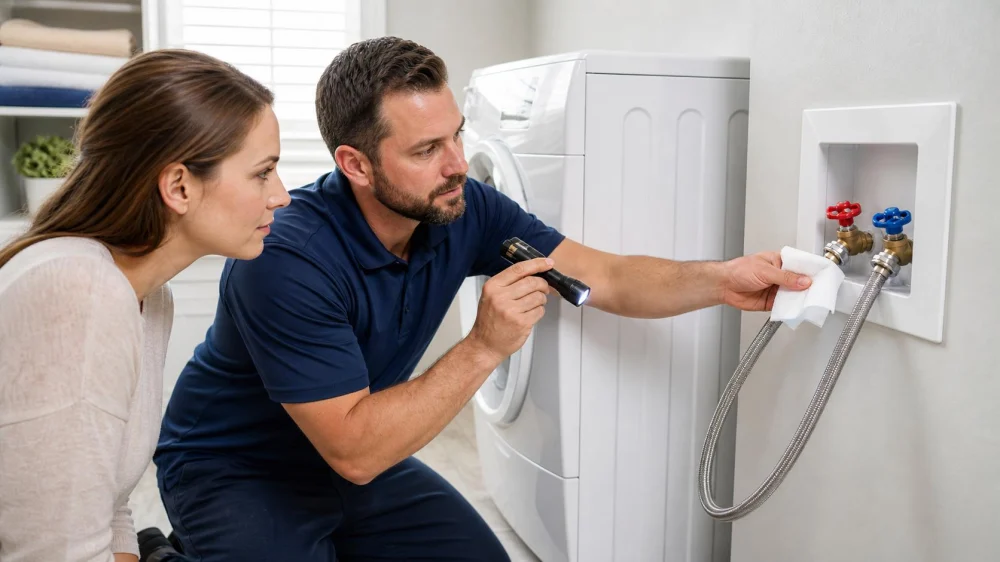
Washing Machine Hose Checks That Help Prevent Leaks
On this page
Quick answer
Inspect washing machine supply hoses and connections at least as part of an annual home check and any time the appliance is moved. Replace a hose immediately if it leaks, bulges, cracks, kinks, corrodes at the fitting, or has damaged threads. Follow the washer and hose manufacturers' replacement interval; do not assume a braided exterior makes a hose permanent. Keep both shutoff valves accessible and know the main water shutoff location.
A washing machine supply hose is a pressurized connector that carries hot or cold water from a shutoff valve to the appliance. Because it can remain under pressure even when the washer is idle, a small defect can become a large water release.
Inspect the full connection, not only the hose
- Hose body: Look for bulges, blisters, cracking, abrasion, flattening, sharp bends, discoloration, or exposed reinforcement.
- End fittings: Check for rust, mineral deposits, moisture, cross-threading, or deformation.
- Valves: Look for seepage around the handle, stem, wall box, and threaded outlet.
- Appliance inlets: Inspect the connection area for water tracks without removing covers.
- Routing: Ensure the washer is not crushing the hoses and that vibration is not rubbing them against a sharp edge.
- Drain hose: Separately confirm it is secured and not split, pinched, or pushed too far into the standpipe.
A safe inspection checklist
- Turn the washer off and provide bright lighting behind it.
- Do not pull the appliance alone if it is heavy, stacked, connected to gas, or fitted tightly.
- Use a dry paper towel around accessible connections to reveal slight moisture.
- Run a short observed cycle and watch the fill and drain phases. Never reach behind a moving appliance.
- After the cycle, recheck the floor, wall box, hoses, and fittings.
- Record the hose brand, model if visible, installation date, and manufacturer instructions.
Do not tighten a leaking connection aggressively. Plastic appliance inlet threads and valve bodies can crack, and a damaged washer or misaligned fitting may need replacement rather than more torque.
Repipe Top Team Plumbing
Costa MesaOrange CountyCalifornia
151 Kalmus Dr A203, Costa Mesa, CA 92626, USA
How to plan a hose replacement
Choose connectors listed for washing machine supply and compatible with the valves, washer inlets, water temperature, pressure, and local code. Verify the required length without stretching the hose or creating a tight bend. Braided stainless-steel jackets can improve abrasion and burst resistance, but the internal hose and end fittings still age.
A plumber or qualified installer is the safer choice when valves will not close fully, fittings are corroded, threads are damaged, space is restricted, pressure is questionable, or the appliance must be moved over stairs or finished flooring. Test both hot and cold connections after installation.
Automatic leak sensors and shutoff devices can add protection, especially for an upstairs or finished laundry area, but they require correct placement, compatible valves, power or batteries, testing, and maintenance. A drain pan also needs a properly designed discharge path; a pan with nowhere to drain cannot contain a major release.
What to do if a hose starts leaking
- Do not step into standing water near electrical equipment.
- If it is safe and accessible, close the washer's hot and cold valves. Use the main shutoff if the local valves fail and you know how to operate it.
- Shut off electrical power only from a dry, safe location; call emergency services for an electrical hazard.
- Call a plumber and begin safe water removal. Document damage for the property owner or insurer.
- Do not reuse a failed hose or a connection that pulled loose until the cause is assessed.
Evidence note: FEMA home-safety materials recommend checking washing machine hoses for wear. The Insurance Information Institute advises annual appliance-hose inspection, immediate replacement for cracks or leaks, and knowing the main shutoff. Replacement timing differs by hose and appliance, so the manufacturer's instructions control.
Frequently asked questions
Should washer valves stay open all the time?
Many homes are configured that way, but closing accessible, functioning valves when the machine will be unused can reduce exposure. Follow appliance and valve guidance and repair valves that are difficult to operate.
Is a braided hose leak-proof?
No. The reinforcement can improve durability, but internal material, crimps, fittings, threads, installation, pressure, and age still matter.
Can I reuse hoses with a new washing machine?
Use the appliance manufacturer's installation instructions. New approved hoses are often required or prudent; old seals and unknown service history add risk.
Why is the wall box wet only during a cycle?
A connection may leak under flowing pressure, or water may come from the drain, appliance, or condensation. Observe safely and have the source identified.
Next steps
Photograph the connections, find the installation date, inspect with the machine off, then observe one fill-and-drain cycle. Replace questionable parts before they fail, keep shutoffs unobstructed, and add the hose check to an annual maintenance calendar.
 Hudson Plumbing4.0 (466 reviews)
 Papa Micks Plumbing4.0 (46 reviews)
 Great Lake Plumbing Service Inc.4.0 (12 reviews)
 Cedar Bluff Plumbing4.0 (68 reviews)
 Sinclair Plumbing, Inc.4.0 (61 reviews)
 Dj's Plumbing LLC5.0 (1 reviews)
 What Causes Discolored Water and When to Worry
 How to Choose Bathroom Plumbing Fixtures for Your Remodel
 How to Replace a Mixing Valve for Tempered Water
 Water Hammer or Pipe Noise? How to Tell the Difference
 How to Replace Your Showerhead and Improve Water Flow
 How to Install Plumbing for a Basement Bathroom - Step-by-Step Guide