
Outdoor Faucet Moves in the Wall: Stop and Support the Line
On this page
Quick answer
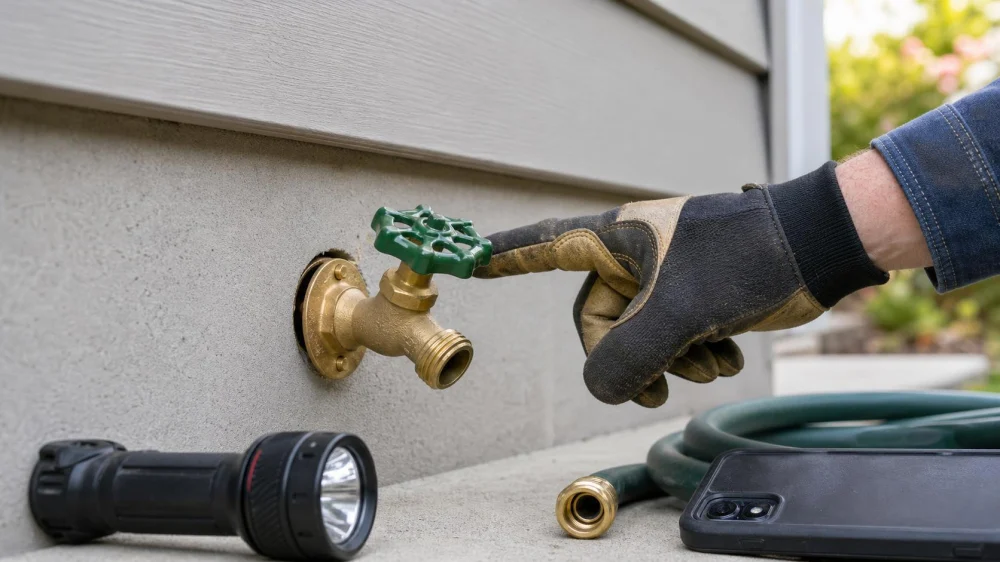
If an outdoor faucet moves, rotates, or pulls away from the wall, stop using the hose and do not twist the faucet tighter. Movement can stress a hidden supply joint or indicate missing fasteners, a loose mounting flange, damaged siding, or an unsupported pipe. Keep the area dry, locate the indoor shutoff, photograph the movement without forcing it, and call a plumber if the source is unclear.
This guide covers visual checks for US homes. It does not authorize opening a wall, repairing a pressurized pipe, or attaching hardware through unknown utilities.
Americana Plumbing Experts Inc.
La Crescenta-MontroseLos Angeles CountyCalifornia
5129 Circle Vista Ave, La Crescenta-Montrose, CA 91214, USA
What the movement may mean
An exterior hose faucet may be a short sillcock connected near the wall surface or a long frost-resistant unit extending into the heated space. Either type should be supported so normal handle and hose loads do not flex plumbing connections.
Movement may come from loose mounting screws, missing blocking, an enlarged siding hole, a detached flange, flexible pipe without adequate support, freeze damage, corrosion, or a connection that has begun to separate. The location of motion matters: a loose handle is different from the entire faucet body rotating in the wall.
A dark stain, soft siding, indoor moisture, hissing, or water appearing only while the faucet runs raises concern for a hidden leak. Do not keep testing to make the symptom more obvious.

Helmus Plumbing Services, Inc.
KalamazooKalamazoo CountyMichigan
2830 S 26th St, Kalamazoo, MI 49048, USA
Safe checks
- Disconnect the hose. Remove its weight only if it unscrews without rotating the faucet body. Stop if both turn together.
- Dry the area. Wipe the faucet and wall so new moisture is visible.
- Look at the flange. Note missing screws, gaps, cracked sealant, bent metal, or damaged siding.
- Observe from indoors. If the pipe is visible in a basement or crawl space, look for movement, drips, stains, corrosion, or inadequate support without touching electrical hazards.
- Locate the shutoff. Identify the branch valve if one exists and the main water shutoff in case leakage begins.
- Photograph the condition. Capture the wall, faucet, interior pipe route, and any moisture. Do not repeatedly wiggle the fixture for video.
- Keep it out of service. Tag it so another household member does not reconnect a hose.
If water is actively leaking, close the appropriate shutoff if it can be operated safely and call a plumber. Keep water away from outlets, exterior lighting, and damaged wiring.
What not to do
- Do not use the handle or a wrench to rotate the entire faucet clockwise.
- Do not add longer screws without knowing what is behind the wall.
- Do not fill the opening with expanding foam as a structural repair.
- Do not caulk over an active leak or wet, decayed material.
- Do not brace the faucet with the hose or leave a heavy splitter attached.
- Do not enter a wet crawl space with electrical or structural hazards.
Turning the faucet body can unscrew a threaded connection or twist tubing inside the wall. A cosmetic bead of sealant may hide a gap without restoring support or stopping water inside the assembly.
What a plumber may inspect
A plumber can identify the faucet type, pipe material, connection method, shutoff condition, and support. They may need access from an unfinished area or a controlled opening to inspect the joint. Ask how the pipe will be immobilized before the exterior flange is secured.
For a frost-resistant faucet, installation angle, stem length, interior connection, and drainage after shutoff matter. If the unit froze with a hose attached, damage may leak inside the wall only when water flows. Tell the plumber when the movement began and whether the hose remained connected during freezing weather.
Wall repair may require another trade when siding, sheathing, masonry, flashing, or interior finishes are damaged. Ask who will close and weatherproof any access opening.
Prevention and seasonal care
Disconnect hoses when the faucet is not in use and before freezing weather where applicable. Avoid pulling a long hose sideways from the spout; use a guide or reel so the building connection does not carry the force. Support heavy timers, splitters, filters, and vacuum breakers according to product instructions.
Each season, check that the flange sits flat, fasteners are present, sealant directs rain away, and the surrounding wall remains firm. Watch the interior connection while the faucet is first used after winter if it is safely visible.
FAQ
Can I tighten the visible screws?
Only if the faucet is stable, the correct fastener and backing are known, and no leak or wall damage exists. Spinning or stripped screws need a proper support repair.
Why does it leak only when the faucet is on?
A pressurized section or damaged frost-resistant body may leak only during flow. Stop testing and have the hidden assembly inspected.
Is caulk enough to hold the faucet?
No. Sealant manages a surface joint; it is not structural support for the faucet or supply pipe.
Should I close the main water valve?
For active uncontrolled leakage, close the appropriate verified shutoff if safe. For a dry loose fixture, keep it unused and arrange repair without operating unknown valves unnecessarily.
Can a hose reel prevent movement?
A correctly placed reel reduces pulling force, but it cannot repair loose mounting, a damaged connection, or inadequate pipe support.
Next steps
Remove hose weight without twisting the body, dry and photograph the wall, find the shutoff, and keep the faucet unused. Give the plumber both exterior and accessible interior photos so support, pipe connection, water damage, and weather sealing can be planned together.
Evidence note: This article uses conservative plumbing and building-envelope safety principles. The installed fixture and site determine the correct repair.

 Randy's Electric & Plumbing4.0 (59 reviews)
 Langford Plumbing Co5.0 (3 reviews)
 Bulldog Sewer & Drain, LLC4.0 (45 reviews)
 VHL Plumbing Inc5.0 (8 reviews)
 Copper Creek Plumbing, Inc.3.0 (10 reviews)
 Red Beard Plumbing5.0 (24 reviews)
 How to Fix a Sink That Rattles When Water Runs: Troubleshooting Guide
 Why Your Water Pressure Is Low and How to Fix It
 The Top Plumbing Tools Every Homeowner Should Have in Their Toolkit
 How to Recognize the Early Signs of Plumbing Problems Before They Become Expensive
 How to Replace a Dual-Flush Toilet Mechanism: A Complete Guide
 How to Replace a Leaky Shower Valve Step by Step: Easy Guide for Homeowners