
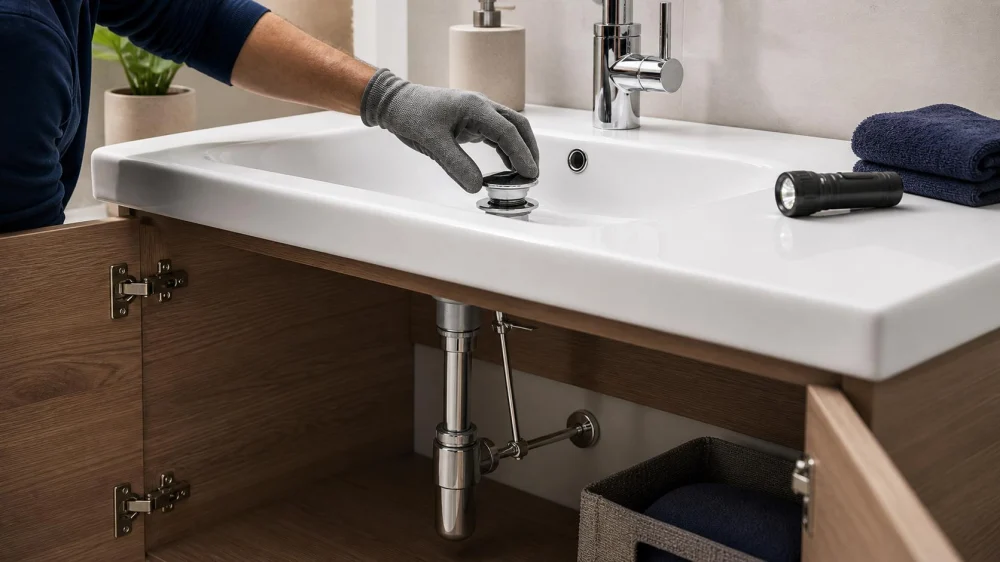
Bathroom Sink Stopper Won't Seal: Safe Checks to Try
On this page
Quick answer
If a bathroom sink stopper will not hold water, first remove hair and residue from the stopper and drain rim, then check whether the stopper sits straight and moves through its full range. For a lift-rod pop-up, inspect the pivot rod and clevis under the sink without loosening drain joints. Stop if fittings leak, metal is corroded, or access is unsafe.
This guide covers simple observations for US household sinks. It does not replace a plumber when the drain body, trap, or hidden connection needs repair.
Identify the stopper type
A lift-rod pop-up uses a rod behind the faucet connected to a strap and horizontal pivot rod beneath the basin. A push-button or click-clack stopper opens and closes when pressed. A lift-and-turn stopper is raised and rotated by hand. Some sinks use a removable plug.
Identify the mechanism before turning or pulling parts. Forcing a push stopper as if it has a hidden lift rod can damage it. Photograph the open and closed positions and the under-sink linkage before making an adjustment.

PDS Plumbing and Air
BellflowerLos Angeles CountyCalifornia
9706 Alondra Blvd, Bellflower, CA 90706, USA
Checks from above
- Empty the basin. Remove valuables and keep chemical cleaners away from the work area.
- Clean the sealing surfaces. Wipe hair, soap film, toothpaste, and mineral residue from the stopper edge and drain rim with a non-scratching method suitable for the finish.
- Inspect the gasket. Look for a twisted, missing, hardened, or cracked rubber seal.
- Check alignment. Close the stopper slowly and see whether one edge remains higher.
- Compare travel. Confirm it rises enough to drain and lowers enough to contact the rim.
- Look for damage. Bent stems, loose caps, chipped drain surfaces, and heavy corrosion need more than cleaning.
Do not pry against a porcelain or composite basin with a screwdriver. If a removable stopper is stuck, identify the retaining method before pulling harder.
Under-sink linkage checks
Clear the cabinet and place a dry towel under the drain. Use a flashlight. For a lift-rod assembly, observe how the vertical clevis strap moves the horizontal pivot rod while another person gently operates the lift rod.
If the connection has slipped into a poor hole on the clevis, the stopper may not travel far enough. Mark the original position, then make only the adjustment intended by the fixture manufacturer. Keep the spring clip installed correctly so the rod cannot detach.
Do not loosen the pivot retaining nut casually. That connection passes into the drain body and can leak if its seal is disturbed, cross-threaded, or over-tightened. If the pivot rod is corroded, broken, or missing its ball seal, plan a proper replacement rather than bending it.
Test without causing a leak
- Dry the drain body, pivot nut, tailpiece, and trap exterior.
- Close the stopper and add only a shallow amount of water.
- Mark the water level or take a timed photo to distinguish slow seepage from immediate failure.
- Open the stopper and watch the drain flow while checking underneath with a dry paper towel.
- Repeat the open-close action several times and recheck every joint.
A sink stopper is not usually a permanent watertight storage seal. A very slow level change may be normal for some assemblies, while rapid loss suggests a damaged or misaligned sealing surface. Compare against the fixture's expected function.
When to stop
Call a plumber when water appears under the sink, the drain body moves in the basin, the trap is cracked, corrosion is extensive, parts do not match, or the stopper cannot be removed without loosening unknown fittings. Stop immediately if the cabinet contains damaged wiring or an active electrical hazard.
Do not combine chemical drain cleaner with disassembly. Tell a plumber exactly what product entered the drain and when. Avoid overtightening plastic or thin metal nuts; cracking a fitting turns a stopper problem into a leak.
FAQ
Why does the stopper close but drain slowly when open?
The opening may be too small, or hair and residue may restrict the drain. Clean accessible material and check travel before assuming a deeper clog.
Can I replace only the rubber seal?
Some models allow it; others require the complete stopper or drain assembly. Identify the manufacturer and dimensions before buying a part.
Why did the lift rod become loose?
The clevis screw or spring clip may have loosened, or the pivot rod may have detached. Inspect the linkage without disturbing drain seals.
Should I use plumber's putty on the stopper?
No. Putty may be used in some drain-body installations, not as a temporary coating on the moving stopper. Follow the fixture instructions.
Can a stopper problem cause a cabinet leak?
The stopper itself may not, but adjusting the pivot connection or a loose drain body can. Test every joint after any under-sink work.
Next steps
Identify the stopper, clean the sealing surfaces, photograph the linkage, and test with shallow water while watching below. If alignment cannot be restored without opening a sealed joint, give the photos and fixture details to a plumber.
Evidence note: This article reflects common pop-up drain mechanisms and conservative leak-prevention practice. Fixture instructions control the exact adjustment.

 Randy's Electric & Plumbing4.0 (59 reviews)
 Langford Plumbing Co5.0 (3 reviews)
 Bulldog Sewer & Drain, LLC4.0 (45 reviews)
 VHL Plumbing Inc5.0 (8 reviews)
 Copper Creek Plumbing, Inc.3.0 (10 reviews)
 Red Beard Plumbing5.0 (24 reviews)
 How to Fix a Sink That Rattles When Water Runs: Troubleshooting Guide
 Why Your Water Pressure Is Low and How to Fix It
 The Top Plumbing Tools Every Homeowner Should Have in Their Toolkit
 How to Recognize the Early Signs of Plumbing Problems Before They Become Expensive
 How to Replace a Dual-Flush Toilet Mechanism: A Complete Guide
 How to Replace a Leaky Shower Valve Step by Step: Easy Guide for Homeowners