

How to Review a Plumbing Repair Invoice Before Paying
On this page
- Quick answer
- Match the invoice to the approved work
- Understand labor and service charges
- Identify installed parts and equipment
- Resolve changes, permits, and testing
- Capture warranties and follow-up
- Invoice review checklist
- Limitations and dispute notes
- Frequently asked questions
- Consumer and maintenance notes
- Ask for one corrected record
Quick answer
Before paying a plumbing repair invoice, verify the customer and service address, dates, plumber or company, work performed, affected fixtures and locations, labor or service charges, installed parts, disposal, permits, taxes, discounts, deposits, balance, payment terms, and warranty. Compare it with the estimate and approved changes. Ask for a corrected, itemized record when the scope, quantity, model, charge, or promised result is unclear.
An invoice documents a transaction; it does not by itself prove that hidden work, code compliance, or long-term performance has been verified.
Match the invoice to the approved work
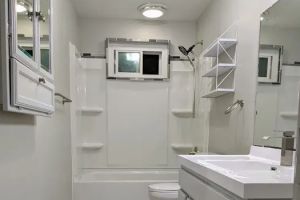
Place the estimate, work order, messages, change approvals, and invoice side by side. Confirm that the problem addressed and the repair location match. Distinguish diagnosis, temporary stabilization, cleaning, repair, replacement, and additional recommended work.
For time-and-material work, check the agreed billing method. For a fixed-price repair, ask why an added charge was not included or approved. A change may be reasonable when hidden conditions emerge, but the invoice should explain what was found and how authorization occurred.
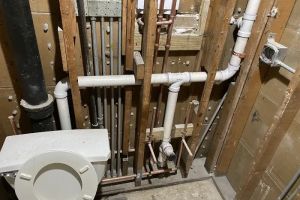
Climatech plumbing & drain service ,inc.
6837 N Lexington Ln, Niles, IL 60714, USA
Understand labor and service charges
Invoices may use hourly labor, flat-rate tasks, minimum service periods, dispatch or trip fees, after-hours premiums, equipment charges, and diagnostic fees. Ask which charges can overlap and whether a diagnostic fee was credited to the repair. Do not assume technician hours equal elapsed clock time; companies may bill by task or include travel and support under their disclosed terms.
If multiple workers appear, confirm their roles and the applicable rate or flat-price basis. Request a plain explanation, not confidential internal payroll information.
Identify installed parts and equipment
For significant items, record manufacturer, model, capacity or size, quantity, and serial number when applicable. Examples include faucets, valves, pumps, disposals, water heaters, filtration units, backflow devices, and leak-detection equipment. Clarify whether small fittings and consumables are grouped as materials.
Ask whether parts are new, owner-supplied, refurbished, or reused and who supports them. Save manuals, labels, receipts needed for rebates, and warranty documents. When an efficient replacement was promised, verify the exact model and any relevant WaterSense or ENERGY STAR status rather than relying on a generic description.
Resolve changes, permits, and testing
Confirm whether a permit or inspection was required, who obtained it, its status, and whether the fee is included. Rules vary by jurisdiction and repair type. Ask which leak, pressure, drainage, combustion, temperature, or operational checks were completed after the work.
Inspect accessible areas for normal operation and visible leakage without dismantling anything. Note pre-existing damage and cleanup separately. EPA WaterSense advises checking visible connections, valves, and water-using equipment for leaks and addressing problems promptly.
Capture warranties and follow-up
Separate the manufacturer's product warranty from the contractor's labor warranty and any paid service plan. Record what each covers, exclusions, start and end dates, claim contact, response process, and whether travel, labor, shipping, or diagnostic costs remain.
FTC consumer guidance recommends getting promises in writing and saving warranties with receipts. If a follow-up visit or ordered part remains, the invoice should state the open item, expected timing, and payment relationship clearly.
Invoice review checklist
- Verify address, dates, company, and license information where applicable.
- Match completed work to estimate and approvals.
- Explain labor, flat-rate, trip, and after-hours charges.
- Identify major parts by model and quantity.
- Apply deposits, discounts, taxes, and credits correctly.
- Record permits, tests, and unresolved work.
- Save product and labor warranty terms.
- Obtain a paid receipt and final corrected copy.
Limitations and dispute notes
- This guide is not legal, tax, code, or licensing advice.
- Invoice and contractor requirements vary by state and locality.
- Do not delay emergency measures while disputing documentation.
- Keep communication factual and in writing; preserve original records.
- Use the contract's dispute process and appropriate local consumer or licensing resources when direct clarification fails.
Frequently asked questions
Must every washer and fitting be itemized?
Not always. Ask for enough detail to understand the repair, major parts, pricing basis, and warranty.
Why is the part price higher than a retail listing?
Contractor pricing may include sourcing, transport, stocking, selection, warranty handling, and business overhead; ask what the quoted task includes.
Should I receive the old part?
Ask before work begins. Safety, contamination, core returns, disposal rules, or warranty claims may affect whether it can be retained.
What if the repair still leaks?
Protect the property, use the appropriate shutoff if safe, notify the company promptly in writing, and follow the warranty or emergency process.
Is a receipt different from an invoice?
An invoice requests or details payment; a receipt confirms payment. Keep both when they are separate.
Consumer and maintenance notes
The FTC advises consumers to get written estimates and contracts describing work, materials, timing, price, and promises. Its warranty guidance recommends saving written coverage and receipts. EPA WaterSense home-maintenance guidance supports checking repaired systems for visible leaks and retaining accurate model information for efficient fixtures.
Ask for one corrected record
Circle the first invoice line you cannot connect to the approved work and ask the company for a written clarification or corrected itemization. Pay according to the contract once the record and work are properly resolved.

 The Water Heater Guys Plumbing & Drains5.0 (57 reviews)
 Ludwigs Plumbing4.0 (20 reviews)
 Berts Sewer and Drain Cleaning1.0 (1 reviews)
 AS Plumbing Mechanical5.0 (478 reviews)
 Howard's Plumbing, Heating & Air Conditioning, Inc.4.0 (16 reviews)
 Independence Electrical & Plumbing3.0 (35 reviews)
 Why Your Water Softener Isn’t Working and How to Fix It
 How to Choose the Best Faucet for Water Savings
 What Happens When You Pour Grease Down the Drain
 How to Replace a Broken Pipe Bedding Under Floor: A Complete Guide
 How to Test Backflow Preventers Annually: Essential Maintenance for Safe Water Supply
 How to Clean Lime Scale from Shower Doors