
Under-Sink Leak Sensor: Placement, Testing, and Alerts
On this page
Quick answer
Place an under-sink moisture sensor on a clean, dry, stable surface where leaking water would collect first, without blocking plumbing access. Follow its instructions for batteries, hub, app, and optional automatic shutoff. Use the manufacturer's safe test method, confirm every alert reaches the right person, and inspect the cabinet regularly because a sensor warns about water but does not repair the leak.

Choose the right device
Basic sensors sound a local alarm when contacts become wet. Connected models may send phone notifications, while flow-monitoring systems watch broader water-use patterns. Some systems can operate a compatible shutoff valve, which adds installation, power, network, and maintenance requirements.
Check the device's rated location, operating temperature, connectivity, battery type, alert method, privacy terms, and compatibility with any shutoff hardware. A loud local alarm is still valuable when internet service fails.

Place it at the likely low point
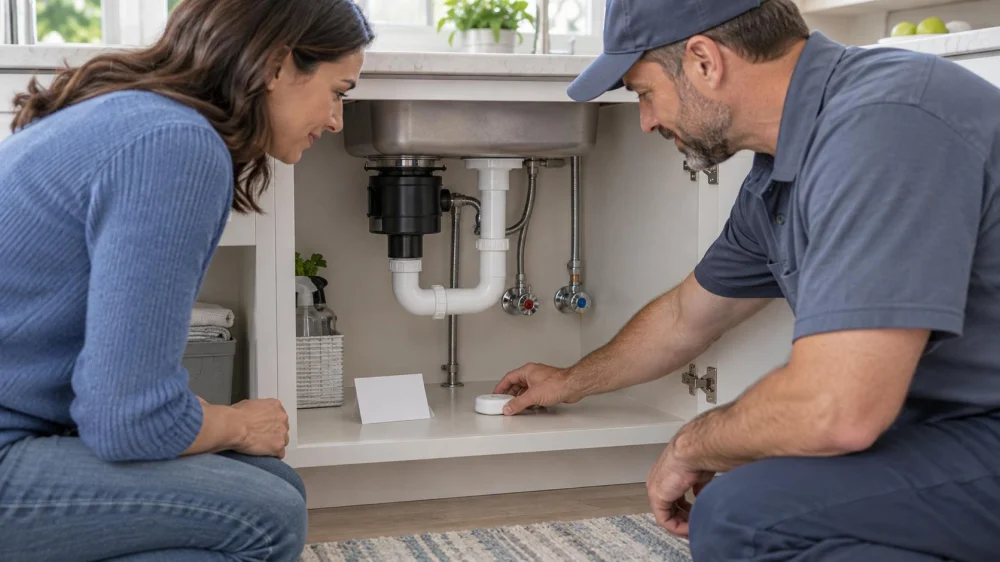
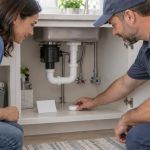
Empty and dry the cabinet, inspect its floor, and identify where water from supply stops, flexible connectors, faucet lines, filter housings, drain joints, or a disposal would naturally travel. Put the sensing contacts at that low point while keeping the unit visible and reachable.
Do not tape a sensor to pipes, place it in standing water, cover ventilation openings, or wedge it against moving disposal parts. Keep cleaning products from leaking onto it and preserve clear access to shutoffs and plumbing.
Set up alerts and shutoff features
Name the sensor by exact location, such as “kitchen sink,” and enable the notification types you will notice. Add another responsible household member if the system supports it. Confirm whether alerts depend on Wi-Fi, a hub, cellular service, or an active subscription.
An automatic shutoff should be installed and configured according to the manufacturer and local plumbing requirements. Know how to operate it manually and what happens during power, battery, or network failure.
Test without creating a leak
Use the manufacturer's test button, probe test, or a lightly damp cloth only as instructed. Do not loosen a plumbing joint or pour water into the cabinet. Confirm the local alarm, remote notification, device name, timestamp, and any shutoff response.
After testing, dry the contacts and verify that the alert clears. Record the date and result. If a connected device does not notify reliably, troubleshoot it before relying on it.
Maintain the system
EPA WaterSense guidance on leak-detection and flow-monitoring devices explains that moisture and flow systems can identify irregular use and help reduce water waste and damage. EPA also recommends checking installed systems regularly.
Inspect the cabinet and sensor on a schedule, replace batteries before they fail, keep firmware or apps supported, and retest after network changes or plumbing work. Continue ordinary visual leak checks; technology can miss water that travels away from its contacts.
Important safety limits
Keep sensors and power adapters away from unsafe electrical exposure and follow their location rating. Do not reach into a wet cabinet containing outlets, a powered disposal, or damaged wiring. For active flooding, electricity risk, a burst connection, or water entering walls, use a safe main shutoff if trained and call emergency plumbing help.
Frequently asked questions
Can one sensor cover the whole kitchen?
Usually not. Water must reach the sensing contacts, so separate risk areas may need separate devices or a broader flow-monitoring system.
Should the sensor sit directly beneath a joint?
Place it where leaked water will collect while maintaining access and following its orientation and spacing instructions.
Will a sensor detect a slow hidden leak?
Only if moisture reaches it. Hidden wall or floor leaks may require flow monitoring, inspection, or professional diagnosis.
Does an automatic shutoff make inspections unnecessary?
No. Valves, batteries, networks, and sensors can fail, and the underlying plumbing still needs repair.
Sources and evidence notes
This overview uses EPA WaterSense information on moisture detection, flow monitoring, alerts, automatic shutoffs, and maintenance. Device-specific instructions and local plumbing rules govern actual installation.
Next steps
Inspect and dry the cabinet, select a device suited to the location, and place it at the likely low point. Test every alert path, record the result, and schedule battery, connectivity, and visual plumbing checks.

 K & T Plumbing5.0 (4 reviews)
 Sams Plumbing LLC4.0 (6 reviews)
 Drain Specialists Plumbings4.0 (10 reviews)
 Straight Flush4.0 (61 reviews)
 Four Seasons Plumbing4.0 (42 reviews)
 Laclede Plumbing Co3.0 (67 reviews)
 Under-Sink Leak Sensor: Placement, Testing, and Alerts
 Low Water Pressure Log: Fixtures, Timing, and Safe Checks
 Plumbing Supply Credential Check: Verify the Right Qualification
 Plumbing Supply Change Order: Approve Scope and Cost in Writing
 Plumbing Access Panel: Plan Size, Location, and Finish
 Dishwasher Drain Hose: Check Route, Support, and Leaks