
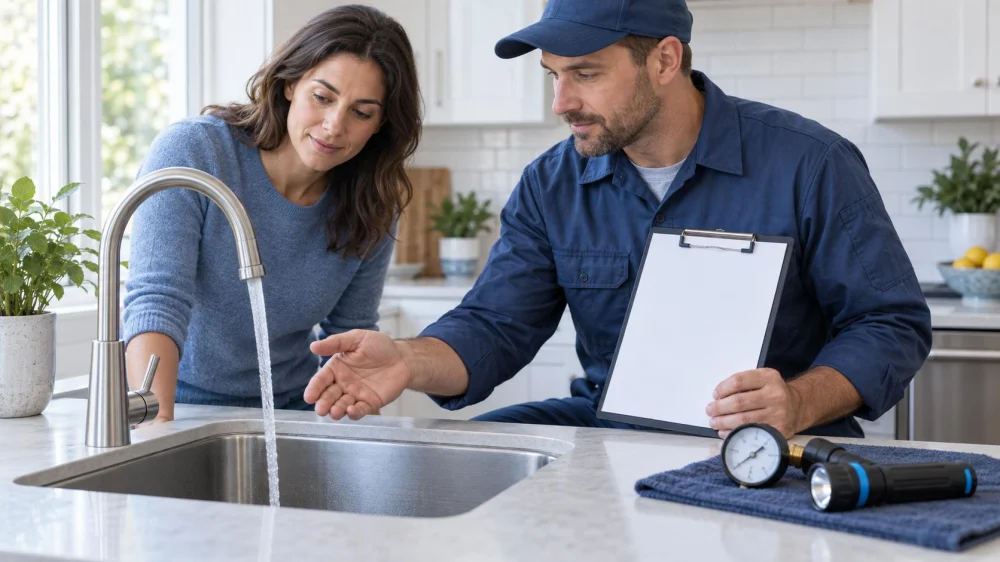
Low Water Pressure Log: Fixtures, Timing, and Safe Checks
On this page
Quick answer
Record whether low flow affects one fixture, one room, hot water only, or the entire home, plus when it started and whether neighbors are affected. Check accessible shutoff handles only visually, inspect faucet aerators for obvious scale, and look for leaks. Do not force valves or adjust a pressure regulator; widespread, sudden, or leak-related changes need the utility or a licensed plumber.
Map the scope
Test fixtures one at a time and write down the result rather than opening everything together. Include kitchen and bathroom faucets, showers, toilets, an outdoor faucet if safe, and appliances only through their normal controls.
One weak faucet points toward a local restriction, while several fixtures may indicate a valve, pressure, pipe, filter, regulator, leak, or utility condition. This pattern is a clue, not a diagnosis.

Compare hot, cold, and timing
At a mixer faucet, compare cold and hot separately. Note whether the change is constant, happens only during peak hours, follows utility work, appears while irrigation or an appliance runs, or began after a repair.
Ask neighbors served by the same utility whether they notice a similar change, but do not rely on their plumbing as proof of your cause. Check the utility's notices or contact its service line for known work and expected restoration time.
Make safe visible checks
Look for puddles, wet cabinets, damp walls, running toilets, unusual meter activity, and audible water when fixtures are off. A faucet aerator with visible scale may restrict one outlet; follow the manufacturer's instructions if it is designed for user cleaning.
Confirm that accessible fixture shutoffs have not obviously been disturbed, but do not twist a corroded, stuck, leaking, or unfamiliar valve. Photograph positions and conditions for the plumber.
Understand pressure measurements
Flow at a fixture and service pressure are related but not identical. Pipe size, restrictions, elevation, simultaneous demand, and equipment all affect what you experience. A pressure gauge reading is useful only when taken correctly and interpreted in context.
EPA WaterSense home-maintenance guidance describes checking service pressure at a hose bib after turning off water-using fixtures and systems, and recommends professional attention when pressure is well outside its stated home-performance range.
Know who to call
Call the water utility when the whole property changes suddenly, neighbors are affected, water is discolored, a notice was issued, or the meter/service connection is involved. Call a licensed plumber for a property-specific leak, stuck valve, regulator concern, recurring restriction, pipe noise, or pressure change after plumbing work.
Report the affected fixtures, hot-versus-cold result, times, recent work, visible leaks, and any utility response. This shortens the diagnostic path and reduces unnecessary disassembly.
Important safety limits
Do not open the utility meter assembly, adjust a pressure-reducing valve, disconnect a water heater, or dismantle concealed plumbing without authorization and skill. Keep away from wet electrical equipment. A burst pipe, rapidly spreading water, ceiling bulge, or water near electricity requires immediate safe shutdown and emergency help.
Frequently asked questions
Why is only one faucet weak?
A local aerator, cartridge, supply stop, or line may be restricted, but inspection is needed to identify the actual cause.
Can I judge pressure by how the stream looks?
No. Appearance suggests a problem but does not provide a reliable pressure measurement or locate the restriction.
Should I turn every shutoff fully open?
Not blindly. Old or corroded valves can leak or fail when moved. Have an unfamiliar or suspect valve assessed.
Does low hot-water flow mean the heater failed?
Not necessarily. Several hot-side components can affect flow; a professional should evaluate the system safely.
Sources and evidence notes
This checklist uses EPA WaterSense guidance on service pressure, fixture maintenance, scale, and leak checks. It helps organize observations but does not replace pressure testing or plumbing diagnosis.
Next steps
Test one fixture at a time, compare hot and cold, document timing, and look only for accessible visible clues. Contact the utility for service-wide changes or a licensed plumber for property-specific restrictions, leaks, or unsafe valves.
 K & T Plumbing5.0 (4 reviews)
 Sams Plumbing LLC4.0 (6 reviews)
 Drain Specialists Plumbings4.0 (10 reviews)
 Straight Flush4.0 (61 reviews)
 Four Seasons Plumbing4.0 (42 reviews)
 Laclede Plumbing Co3.0 (67 reviews)
 Under-Sink Leak Sensor: Placement, Testing, and Alerts
 Low Water Pressure Log: Fixtures, Timing, and Safe Checks
 Plumbing Supply Credential Check: Verify the Right Qualification
 Plumbing Supply Change Order: Approve Scope and Cost in Writing
 Plumbing Access Panel: Plan Size, Location, and Finish
 Dishwasher Drain Hose: Check Route, Support, and Leaks