
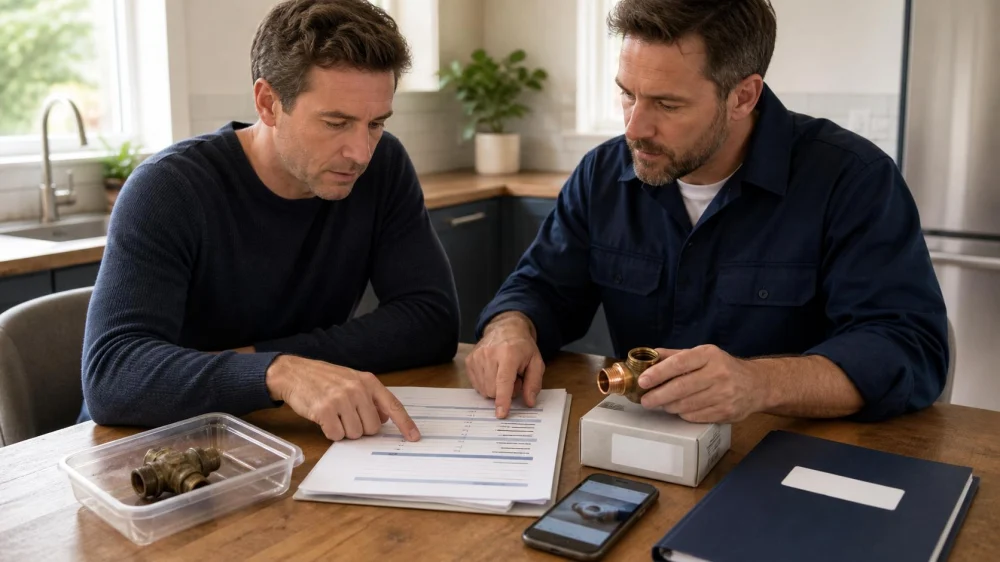
Plumbing Repair Invoice: Check Parts, Labor, and Testing
On this page
Quick answer
Before paying a plumbing repair invoice, match the property, dates, technician, problem, authorized scope, labor method, parts, quantities, changes, permits, tests, cleanup, and warranty to the actual work. Separate diagnostic, dispatch, overtime, material, disposal, and tax charges. Ask for corrections or explanations in writing, keep proof of payment, and do not treat a functioning fixture alone as proof that concealed work is complete.

Separate estimates, authorizations, and invoices
A plumbing repair invoice is the seller's record of work and charges after or during service. It is different from an estimate, quote, work authorization, change order, receipt, permit record, or warranty, although those documents should connect.
Gather:
- original service request and symptom notes;
- diagnostic findings and photographs;
- estimate or quote and its assumptions;
- signed work authorization;
- approved changes, messages, and time records when relevant;
- permit and inspection records;
- final invoice, payment receipt, and warranty terms; and
- manufacturer information for installed equipment or fixtures.
Identify which document controlled price and scope. A rough estimate can change under stated conditions, while a fixed quote may follow different terms.
Match scope and labor to the work
The invoice should name the service location, dates, company, technician or responsible license holder when applicable, and the areas worked on. The description should distinguish diagnosis, temporary stabilization, repair, replacement, restoration, and recommended future work.
For labor, ask whether pricing is flat-rate, hourly, minimum-charge, task-based, or a combination. Confirm:
- dispatch or service-call charge;
- diagnostic time and whether it was credited to repair;
- regular, overtime, emergency, travel, or waiting time;
- number and role of workers;
- equipment, access, excavation, or specialty charges; and
- cleanup, disposal, restoration, or return-visit labor.
A flat-rate price does not need to equal hours multiplied by a wage, but the customer should still be able to identify the task and included work.
Review parts, allowances, and changes
Match installed components to the authorized description: material, size, model, rating, finish, quantity, connection method, and whether an item was new, rebuilt, or customer-supplied. Request serial, model, or product documentation for equipment that needs future service or warranty registration.
Clarify material markup, shop supplies, delivery, disposal, core charges, and allowances. An allowance is a placeholder; the invoice should reconcile it to the selected product under the contract terms.
For unexpected damage or code-related work, look for a written change describing the condition, added or removed scope, price effect, schedule, and authorization. Photographs can support the record but should not replace a clear scope.
Confirm testing, permits, and warranties
Ask how the repair was tested and what result was observed. Depending on the work, documentation may cover leak checks, pressure or flow, drainage, operation, temperature, controls, backflow, safety devices, or another applicable test. Do not perform a hazardous test yourself.
Confirm permit number, inspection status, corrections, and final closure when required. An inspection has a defined scope and does not replace contract completion or manufacturer instructions.
Separate manufacturer, equipment, part, and workmanship warranties. Record start date, coverage, exclusions, customer maintenance, callback process, labor or travel charges, transferability, and who honors each promise.
Use an invoice review checklist
- Match identity and address. Verify company, technician, property, and payment recipient.
- Compare authorized scope. Mark every completed, omitted, or added item.
- Separate charge types. Labor, diagnostic, parts, equipment, permit, disposal, tax, and fees.
- Reconcile changes. Find approval and price impact.
- Confirm installed products. Save model and serial details.
- Review tests and inspection. Obtain results and open items.
- Read warranty and callback terms.
- Pay through a verified channel. Keep receipt and any lien-related documents required locally.
Limitations and safety notes
- Plumbing, contractor, permit, tax, warranty, lien, invoice, cancellation, insurance, and consumer rules vary across the United States.
- This article provides general consumer and recordkeeping guidance, not plumbing, legal, tax, insurance, or accounting advice.
- Do not open walls, operate unknown valves, energize equipment, enter confined spaces, or test gas, sewer, hot-water, or pressurized systems to verify an invoice.
- Call emergency services or the appropriate utility for gas odor, fire, electrical danger, structural risk, sewage exposure, or another immediate hazard.
- Some disputes require a qualified plumber, inspector, engineer, insurer, regulator, or lawyer.
Frequently asked questions
Why is the final invoice higher than the estimate?
Check the estimate assumptions, hidden conditions, approved changes, quantities, overtime, and additional services. Ask for a line-by-line reconciliation.
Must an invoice show every individual part?
Detail requirements vary. Request enough information to understand scope, product, quantity, warranty, and future service, especially for significant components.
Should I receive the old parts?
Ask before work. Safety, contamination, exchange cores, warranty returns, and disposal rules may affect whether they can be retained.
Can I withhold final payment until inspection?
The contract and local rules control payment timing and remedies. Get qualified local advice before withholding an amount or missing a deadline.
What if the repair still leaks?
Stop use when needed to prevent damage, document from a safe location, and contact the company through the warranty or callback process. Seek emergency help for active hazards.
Conclusion and next steps
Place the authorization, changes, invoice, tests, inspection, and warranty side by side. Resolve differences before final payment when possible and request a corrected document rather than relying on a verbal note. Store the final package with property records so future service starts with accurate facts.
Evidence note: These recommendations reflect common plumbing-service, contracting, invoicing, permitting, testing, warranty, and property-record practices. Current duties come from contracts, official rules, product instructions, qualified professionals, and project facts.

 QUICKPROS Plumbing, Heating & Air Conditioning5.0 (15 reviews)
 Robinhood Home Services LLC5.0 (8 reviews)
 American Municipal Private Plumbing5.0 (5 reviews)
 Shield's Sewer Contracting4.0 (12 reviews)
 Erik Nelson Plumbing LLC4.0 (214 reviews)
 Sewer Daddy4.0 (309 reviews)
 How to Detect Hidden Damage After a Plumbing Leak
 How to Replace an Outdated Plumbing Fixture Safely: A Step-by-Step Guide
 How to Choose a Reliable Plumber for Emergency Repairs
 How to Replace a Gate Valve vs a Ball Valve | Plumbers Supply Hub
 How to Install a New Sink Faucet with Pull-Out Sprayer
 How to Fix a Slow Draining Bathtub Quickly and Effectively